Driving in Japan (the focus of my book Driving In Japan), is surprisingly easy and smooth for such a crowded country. As long as you follow both the posted and unwritten rules. And mind the (frequent) exceptions.
10 Top Driving Tips In Japan
Driving in Japan is not very hard, but there are hundreds of small things you have to think about as a driver. And as a driver, you are completely responsible for everything that happens in and around your car. Including how you are driving and any accidents you may cause.
1. Look At The Signs On The Side Of The Road
Street signs are one of the two ways that the current rules of the road are communicated to drivers in Japan. And there are lots of them. So many that it can be difficult to keep them apart.
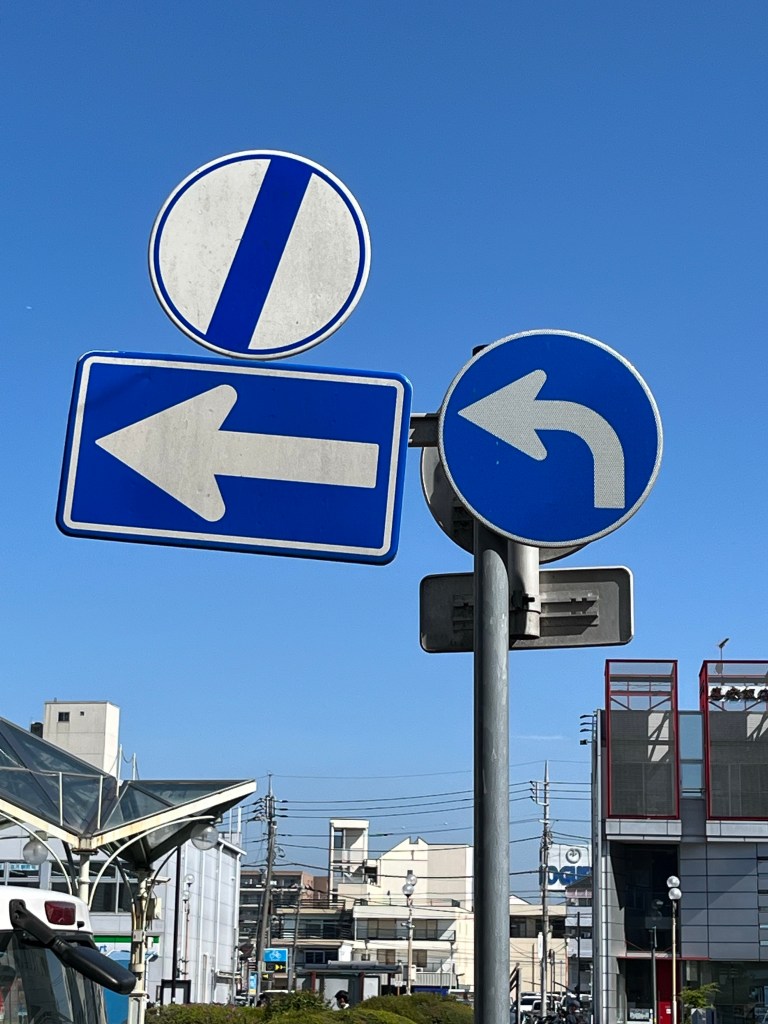
And then, they come with exceptions, of course written in Japanese. Some road signs are not valid at certain times, others only at certain times. Some are not valid for some types of traffic. If you try to decipher them on the fly you will be a traffic hazard – unless you can read fluent Japanese.
Read more about the 10 most common street signs here.
Read about some street signs you are unlikely to see here.
Read more about the strange road signs in Japan here.
Read more about the most common exceptions to street signs here.
Read more about my book “Driving In Japan” here. 
Buy my book “Driving In Japan” directly from this link.


2. Look At The Roadbed

The road signs in Japan are supplemented by large letters and symbols on the roadbed. They are much easier to see than the small traffic signs, which may be hidden by the car in front – it does not even take a truck to make the signs invisible.
The signs and symbols on the road bed are exclusively in Japanese – even when the stop sign is the latest version with English text under the Japanese word for “stop” (止まれ), the text on the road bed will be in Japanese only. The road bed will also frequently be painted red, but while this usually means stop when the road is painted, it often means “don’t stop” or even “careful” when painted elsewhere.
There are some useful things to know about the signs on the roadbed. First, the sign they represent may actually be some distance away. Second, they are not completely advisory. A solid yellow line in the middle of the road means no overtaking – and usually, no passing as well. If you have to stop on the side of the road, make sure to have enough space for other cars to pass you (and that you do not try to stop in a “no stopping” zone).
Read more about my book “Driving In Japan” here. Buy it from these retailers.
Read more about what traffic signs mean in Japan here.
Read more about common exceptions to Japanese street signs here.
3. Look At The Traffic Signals
The traffic signals in Japan can be as simple as anywhere else – or as complicated as a programming puzzle. And on top of that, there are lights which are either red or yellow, and flashing. Those are actually quite easy to handle (just treat them like a stop sign).
The problem comes when there are arrows which change the meaning of the lights depending on whether they are red or green. Rather than spending several hours explaining how that works, just go with the flow and do not drive until others do. And if you are the first in line and have not figured it out yet, do not drive until the cars behind you start honking. If you get it wrong, the car navigation system will adjust the route.
4. Check If You Are In A Zone
One reason there are so few road signs on Japanese roads is that when you are in a zone, where some type of restriction continuously applies, the only road signs showing the restriction may be in the beginning or the end of the zone. If you see a sign with a red arrow underneath, that is where the zone begins (or ends, depending on which direction you are coming from).
The other sign associated with zones is a round sign with white background and a black bar across. It is supposed to be vertical but the signs are often mounted so that it appears at any different number of angles. This means the zone has ended.
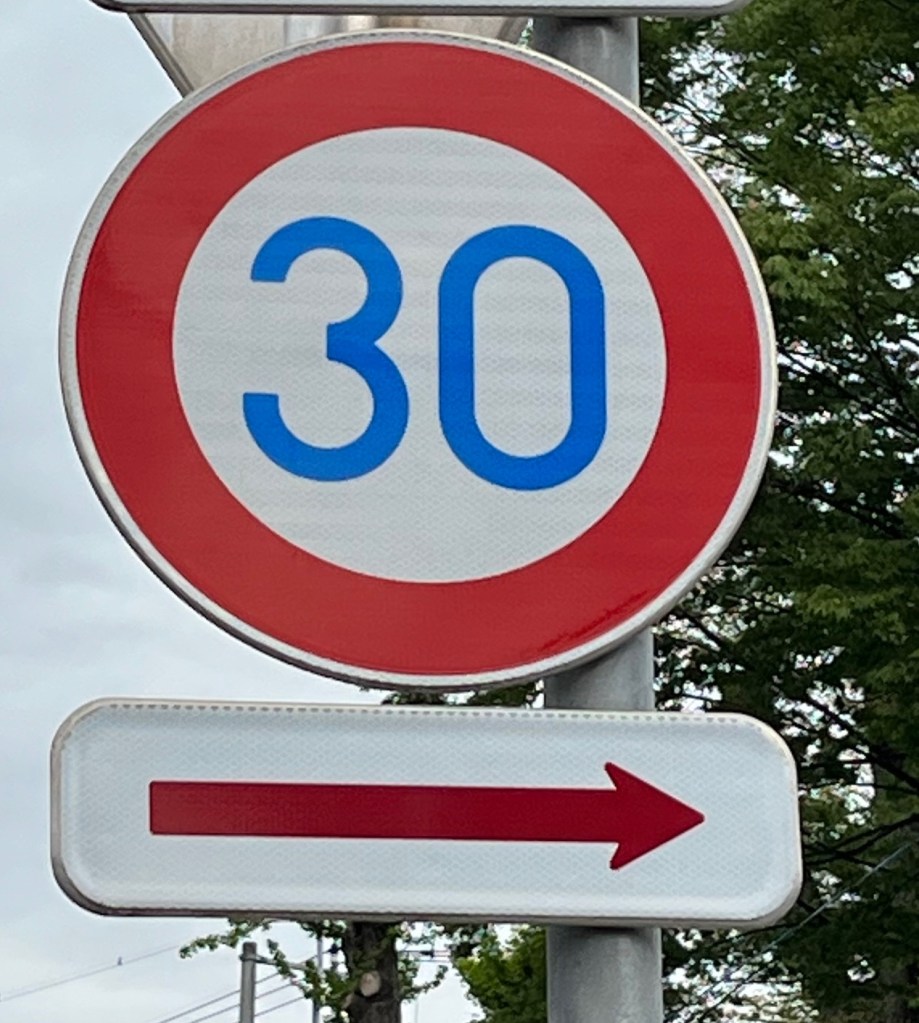
There are two types of zones: no stopping and speed limit zones. The speed limit zone typically limits the speed to 30 km per hour, usually in residential areas, but also in front of schools and similar places (like sports complexes), where there will be a lot of children moving about. Or, increasingly, elderly.
5. Check What Other Drivers Are Doing
In Japan, more than 100 million people are squeezed into something that corresponds to the land area of the San Francisco Bay Area. Only 20 % of the country is habitable, the rest is mountains and small islands – and the country is slightly smaller than California to start with.
But there are people living all over Japan, from the tropical islands in Okinawa to the frozen forests of Hokkaido – and unless they live in big cities, they have to drive to get to the stores, and the restaurants, and sports arenas.
Since such a small part of the country is habitable, that means drivers tend to take the same roads. When all drivers tend to take the same roads the roads get very congested, and when cars enter and leave they will interfere with each other.
To make things move without frustration, the drivers have to take each others actions into account. It means watching out for the actions of others and to make sure you do not get in each others way.
6. Look Out For The Police
This is much less sinister than it sounds. The police in Japan are helpful and while the control of criminal activity is as strict as can be, it is always polite.
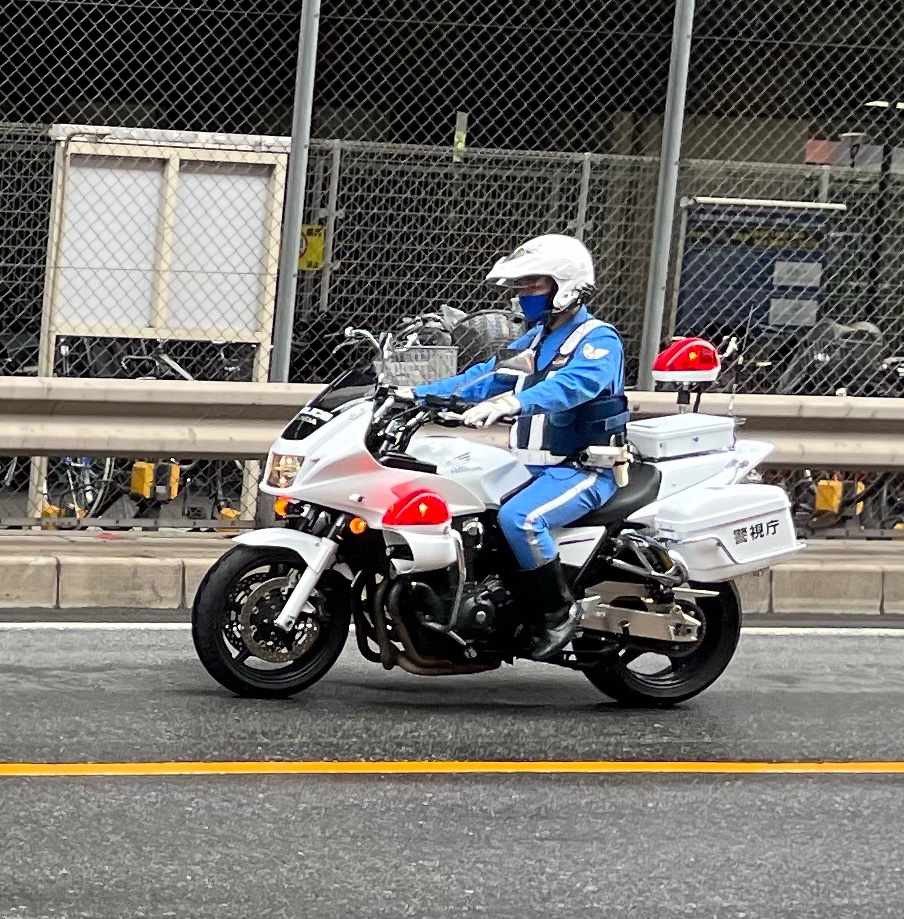
While there are police cars patrolling the roads and highways, they are more focussed on keeping order than catching traffic violators. That job falls to the “White Bikes”, the Japanese motorcycle police.
The motorcycle police is as close to an elite force as you can come in the Japanese law enforcement. They have to pass extremely tough tests and go through grueling training to be able to ride their motorbikes.
Whenever you see a “white bike” you know that it is a good time to slow down and follow the rules. Because they would not be about unless something was about to happen, like roadworks, or the cleanup after an accident. And they will not bother you if you are staying close to the regulated speed. But you will have to be careful up ahead.
7. Look For Temporary Signs At The Side Of The Road
When there is men at work there is additional danger. Not only could your car run into a pothole, on major roads the roadwork may mean lifting up one section of the road entirely.
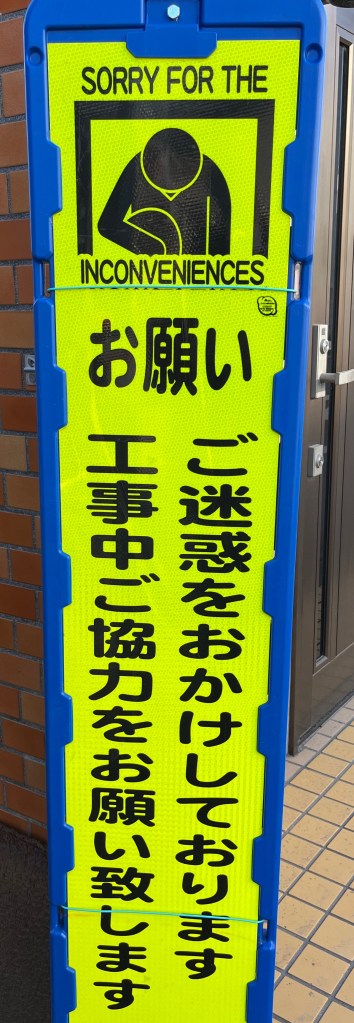
In Japan, most roadworks are completed in a couple of hours. The electricity and communications run in wires strung on the utility poles overhead. Water, sewage, and gas run in pipes under the street.
Since Japanese utility conduits are built to withstand earthquakes, it is not very often that they need to be repaired. The houses were connected when they were built, and the utility connections will be reused even after the house is torn down and a new built in its place.
Not so with wiring. While electricity is not renewed that often, there are still many houses that do not have fiber connections. It is the same company who manages the fiber infrastructure everywhere, but they use many different subcontractors for the installation.
When a house needs to be connected to the fiber network, the contractor has to bring a truck with a lift, and the workers have to splice the fiber from the nearest distribution point, which takes a few hours to half a day. During that time, half the road will be blocked by their trucks.
When there is a roadwork, there will be men with orange illuminated batons directing traffic. They are so ubiquitous that they have become synonymous with traffic diversions, and you can see mannequins taking their place where the role is just to show that a roadwork is coming.
8. If The Road Looks Too Narrow, Take A Different One
Some places in Japan have wide roads – cities like Sendai, and most of the Tohoku area; but also places where new roads have been built to connect to highways or new developments.
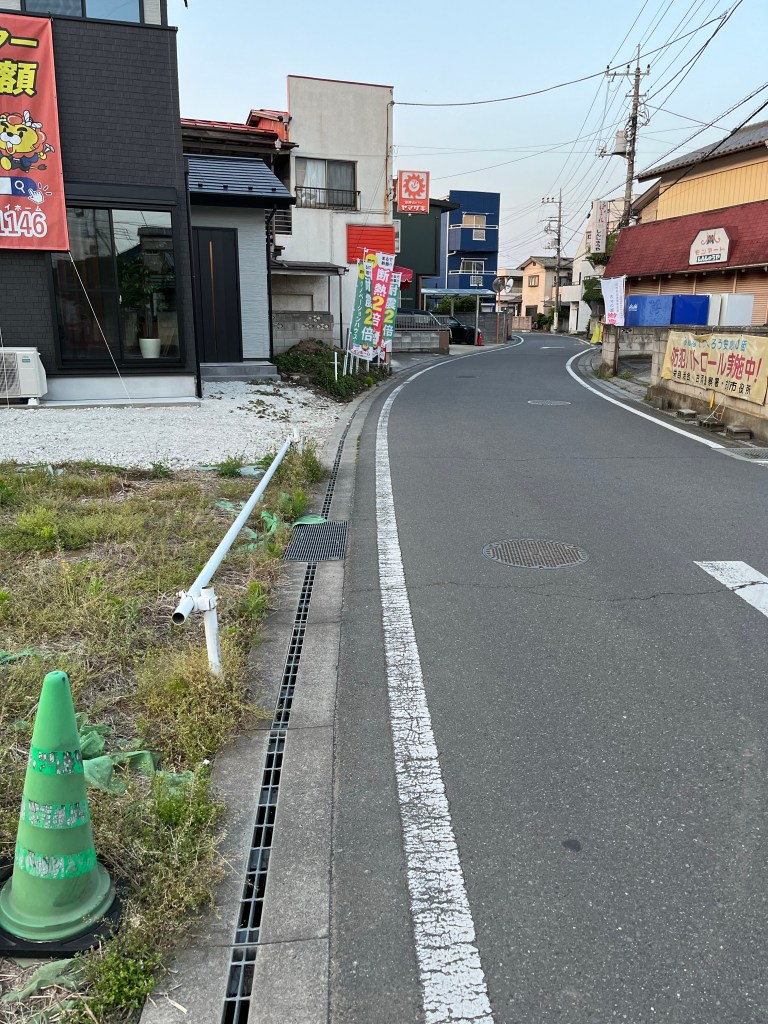
But mostly, the roads are so narrow that it is a problem for two cars to meet. At least if they are not kei cars. In the countryside between rice fields, but especially in the small, old cities that dot the Japanese countryside.
If you are trying to drive in an old city, you want to watch the sides of the road as well as meeting cars. It is easy to scrape into steps sticking out in the roadside, garbage nets, weights holding them down, and other things which makes the road even narrower than it has to be.
This is why I included an entire chapter about driving in small cities in my book “Driving In Japan”, the only book on the market that teaches you how to behave on the road in Japan. Read more about the book here. Or order it from any of the retailers on this site.
9. At Dawn And Dusk, Keep An Eye Out For Wild Animals
One of the surprising things about Japan is that even in a country smaller than California, people only live on 20% of the land. The rest is mountains. And those mountains are tall and inhospitable.
For humans. While the hiking is great, you do not want to get off the trail. The raw nature is not something you want to battle with.
In particular some of the animals you can find in Japan. These are no cuddly pokemon. The bears in Hokkaido are strong enough to rip the head off a fisherman (which happens). And the Japanese macaques may be smaller than baboons, but they can be equally fierce. But the prize is the wild boar, which not only can do considerable damage, and always appear in flocks.
In Japan, where the highways pass through mountains or forest, the spheres of animals and humans intersect where the rubber hits the road. The warning sign for tanuki may look like a cuddly soft animal, but running into one is no joke. They are small but hard to kill.
10. Be Mindful Of The Weather
Weather in Japan can change at a moments notice, and sometimes what started out as a nice day can suddenly explode in squalls so dense that you can not see other cars.
When the weather forecast says that there will be a thunderstorm, you had better be prepared for heavy weather – literally. Thunderstorms in Japan can unload surprising amounts of rain in a very short time, so much that the rain can be so heavy that it is impossible to see other cars – much like a heavy fog.
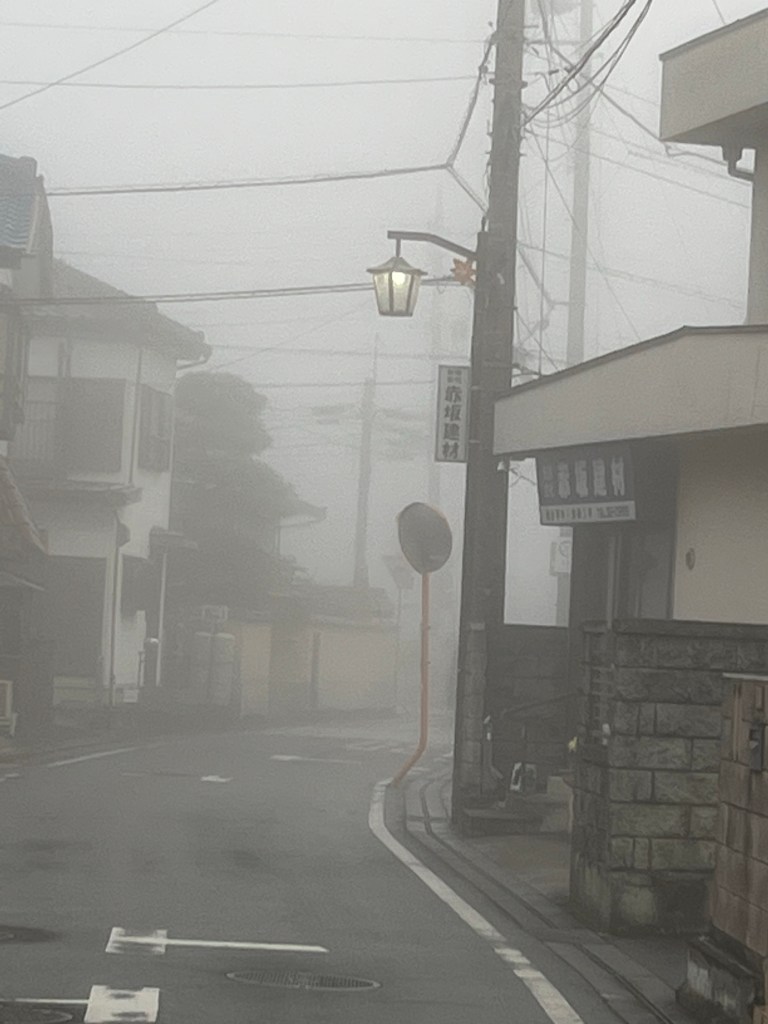
Heavy rain is not the only heavy thing that can happen during a thunderstorm. In spring in particular, there can be hail – and describing it as “as big as hens eggs” is no understatement.
“Heavy” is also the only way you can use to describe snowfalls of two meters in a day – which is not uncommon on the western side of Japan, the one that faces Siberia. Not every year, but ski resorts from Nagano (which held a winter Olympic game) to Hokkaido (where the winter Olympic games were held is Sapporo) are all set up to make most of the short Japanese skiing season.
Driving in two meters of snow goes beyond the competence of most drivers, even those with winter experience (which is why I included a special chapter about winter driving in my book ”Driving In Japan”). You can read more about the book here, or get it right away from your favorite retailer at this link.
 Japan Top 10