Japan has its completely own road signs, and while there are a few that you will find in other countries, most of the road signs in Japan are completely homegrown. Including quite a few important ones. Here are the five you will encounter most often if you drive in one of many small Japanese cities.
1. The Stop Sign
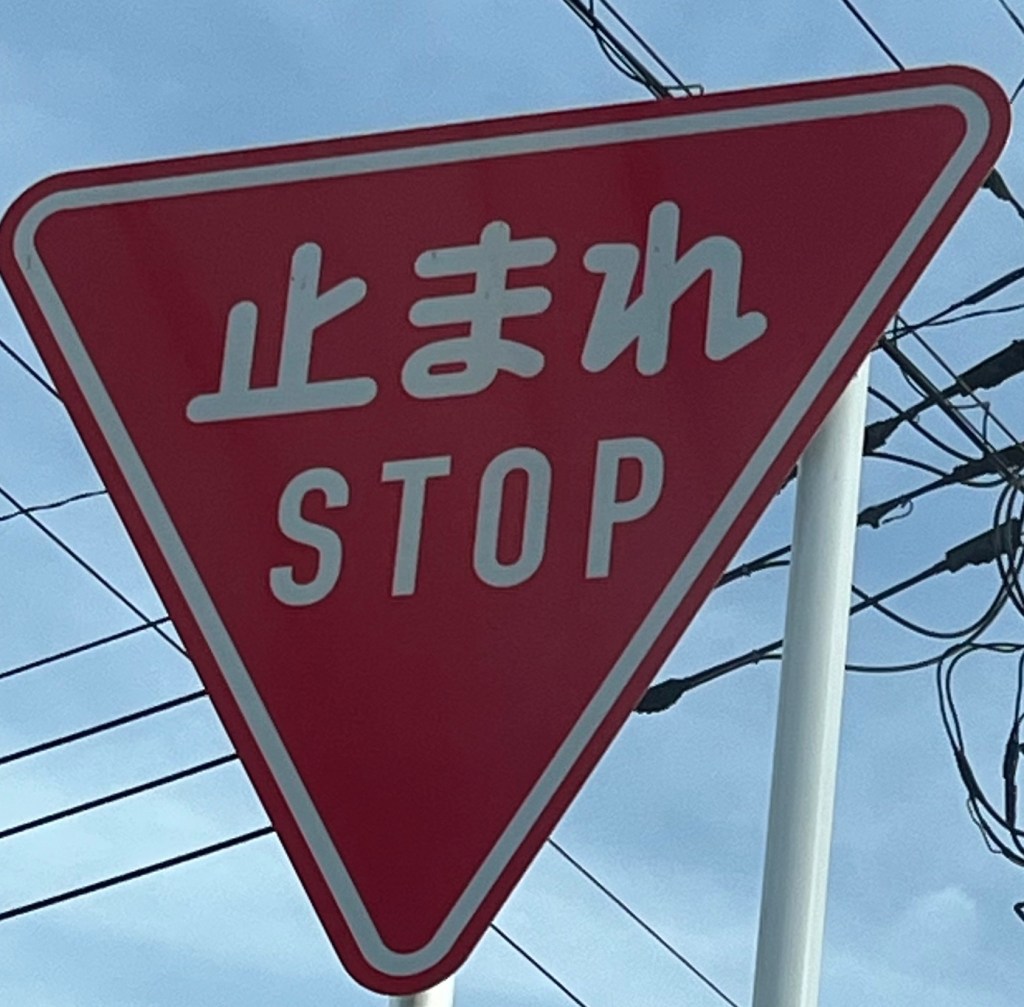
The arguably most important street sign in Japan, even if it is not the most common, is the stop sign. There are four different versions of the stop sign in Japan, even though they are all an inverted red triangle with a white border and text meaning “stop” in Japanese.
I have written more about the four different versions of the stop sign in another article.


2. The Speed Limit
The second most common sign on Japanese roads is the speed limit. This is of course because the speed limit changes quite often.
The normal speed limit in cities is 40 or 50 kilometers per hour, depending on the road and whether it is in the city center or not. Once you go outside the city center, the speed normally increases to 60 kilometers per hour.
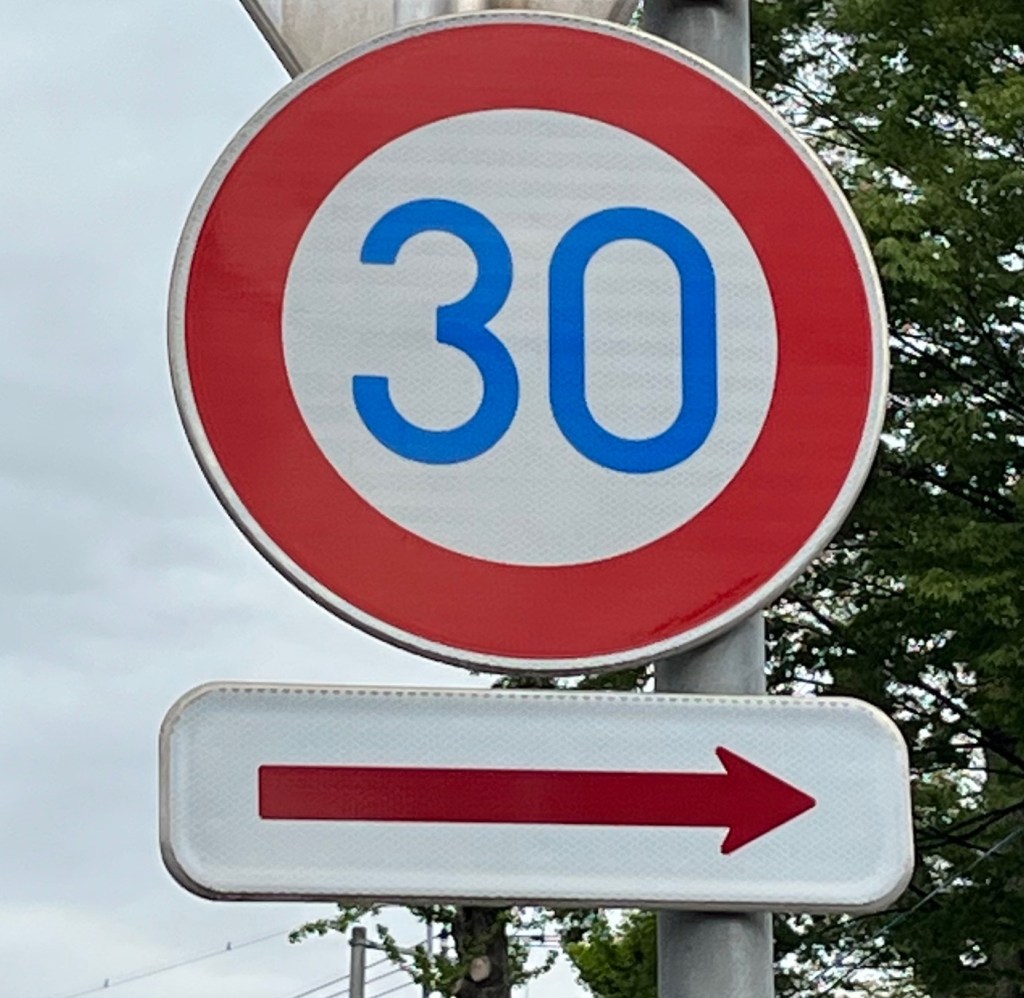
There is one exception to the speed limit signs being ubiquitous, and that is in zones. mostly those are residential areas where the speed limit is 30 km per hour, but there are also 40 km-per-hour zones. The zone is marked by a red arrow under the speed limit sign showing that this is where the zone starts (or ends). It is also often written on the roadbed, which means it is much easier to see than the usually small road signs – except in winter, in areas where roads are covered in snow.
One confusing thing you may find when driving in Japan is that very few people follow the posted speed limit (with one important exception – they drive 30 km per hour in front if schools, without exception).
I have written a great deal about this in my book, “Driving In Japan”, the only book on the market which guides tourists on how to behave on Japanese roads. You can get it here if you want to check out the explanation.
3. No Overtaking
It does of course depend on where you are, but very few roads in Japanese cities are wide enough for two cars to meet while one of them is being overtaken. So one of the most common street signs in Japan is the “no overtaking” sign.
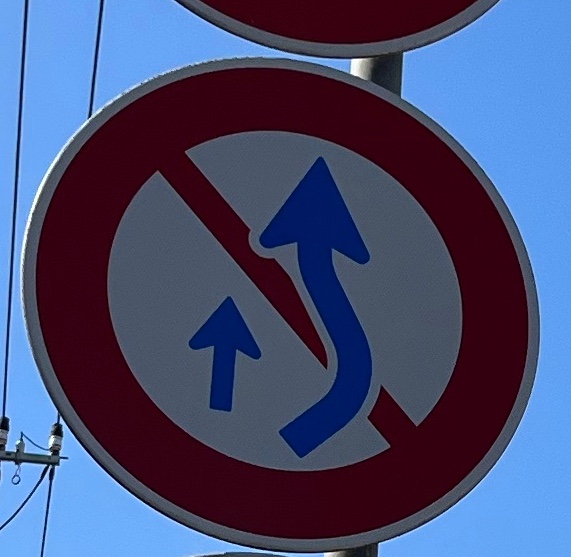
Usually the road will have a solid centerline, which is equivalent to the prohibition against overtaking. The sign also includes passing stopped vehicles, which means that if a car is waiting to turn left or right, traffic will back up behind it.
Occasionally, there is enough space for a vehicle to stop on the shoulder of the road (should stopping be allowed), and if it is possible to squeeze by without crossing the centerline, other cars will pass regardless of whether there is a “no overtaking” sign. As usual in Japanese traffic, following the rhythm is more important than being a stickler for the rules, so if you can pass, do it.
This should probably be one of the tips for driving in Japan, but it is not one of the top ones.
4. No Stopping Or Parking
Japanese roads are rarely wide enough for vehicles to stop at the side of the road. And even so, stopping may be prohibited.
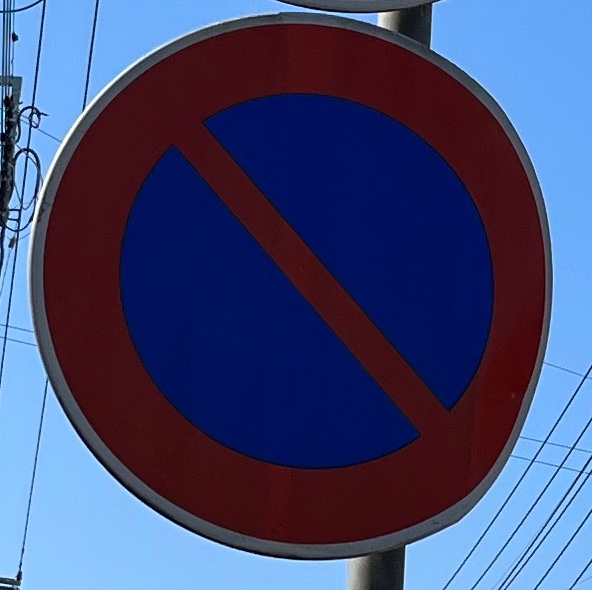
Even if there is no “no stopping” sign along the road, stopping may not be allowed. First, stopping may not be allowed because the road is too narrow. Second, stopping within five meters from a crosswalk (at either side) is not allowed. And stopping in emergency vehicle zones is always prohibited.
There is another reason stopping may not be allowed, and that is a fire brigade cistern. There are water cisterns under
5. Pedestrian Crosswalk
Pedestrians have absolute right of way on Japanese roads, and they know how to use it. Or perhaps, they don’t know better than not using it. You often find old people laboriously crossing the road – diagonally – in any and all places, with serene disregard for any oncoming traffic.
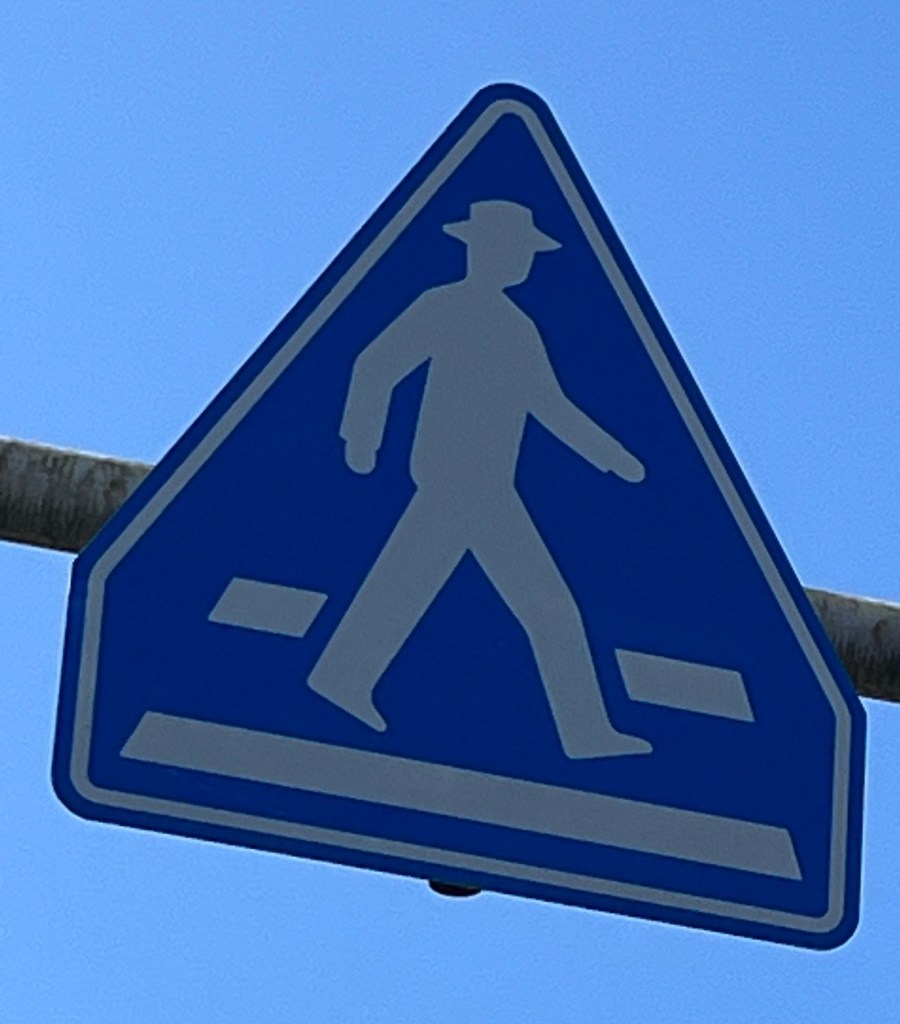
Most people, however, know that if they want to cross the road, they will be more successful at a crosswalk. And there are plenty of those in cities, even on big roads. In the countryside, there are fewer crosswalks (as there are fewer people), but pedestrian-activated traffic lights are more common. From the pedestrian perspective, there are several other road signs you have to look out for.
There is another reason it is better to cross at a crosswalk than anywhere on the street. If you cross at a random place you risk holding up traffic (and be involved in an accident), but if you are waiting at a crosswalk, cars are supposed to stop and let you cross. This does not work very well in reality (perhaps because the legislation was introduced in 2023). But as the police will monitor it more carefully, behavior will improve.
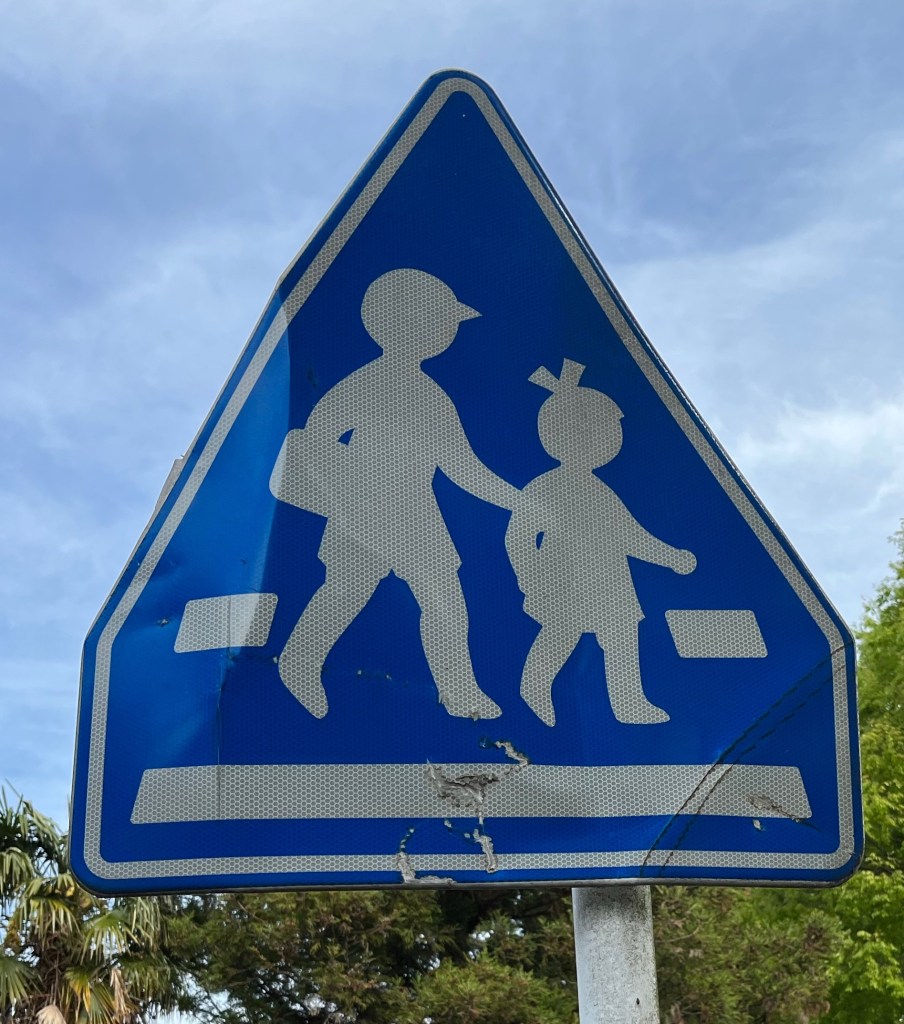
Japan is probably unique in that there is a second type of crosswalk sign. this one appears in front of crosswalks used by children on their way to school, which means that it is much less common than the ordinary crosswalk. But conversely, you need to be more attentive in front of it.
I wrote an entire chapter about pedestrians on the streets of Japan from the perspective of drivers on Japanese roads. You can find the table of contents on my own website, and you can get the book directly from the vendors listed on the Books2Read website.
Did you find this interesting? Then there is a very good chance you will want to read my book “Driving In Japan”. You can fond out more about the book here (including a table of contents), and you can find out where to order the book from this link.
 Japan Top 10