There are dozens of road signs along most Japanese roads. The road signs are home-grown and does not look like any road sign in any other countries. Well, most of them. There are quite a few which share their background with American and European road signs, which also are a reflection of their history.
But things get more complicated by the road signs not always meaning the same thing from one hour to the next. There are plenty of exceptions in the meaning of the traffic signs you will see on Japanese roads. They are posted on a little white sign underneath the main sign, and the exceptions can be anything from the sign not being valid at certain times, to it only being valid for certain types of vehicles, to pedestrians being exempt – to anything in between.
1. Not Valid For Bicycles

Bicycles sit at a strange position on Japanese roads: They are treated as a vehicle, but formally they are a pedestrian. They can not drive on the sidewalk except when there is no space on the road. And older and younger bicyclists are supposed to ride on the pavement at all times. Except when it is too crowded, then they can drive on the road.
So since bicycles already have exceptions, there are plenty of other times when that exception is not valid (exempting the exception, which is very Japanese).
2. Not valid for some types of vehicles
The narrow roads in Japan means that heavy traffic often is forbidden, as the roadbed to be too weak for a heavy truck, or it might not even be able to get through between the houses, much less turn. That is why there are many streets where only microversions of trucks and buses are allowed, so it is one of the many constraints on traffic in Japan.

There are many streets that are too narrow for even the microbuses and microtrucks that populate the roads of Japan. The highways are full of big (and usually shiny) trucks, which would never find its way on a Japanese city street.
The microversions of the same trucks are what makes most deliveries in Japan, to most stores and businesses. But even those are too big for many streets. Delivery trucks, if they are not making deliveries of large and bulky items, are usually even smaller – delivery versions of kei cars.
The kei car is ubiquitous in Japan. It is the workhorse of farms and small companies, and it is extremely popular as it has lower tax thanks to its highly regulated design. The small engine is not much to write home about, but the cars are light and yet roomy, and even though they only have an engine that is a small step up from a motorcycle engine, they can carry surprisingly big loads.
While kei cars are ubiquitous throughout Japan, there are good reasons you should not rent one. Read more about why in the first two chapters of my book “Driving In Japan”.


3. Only Valid Certain Times
The small lanes between houses in Japanese residential neighborhoods may change usage during the day; from pedestrian to allowed for cars in one direction, to allowed for cars in the other direction. And then in the evening, the roads become dedicated to pedestrians again.
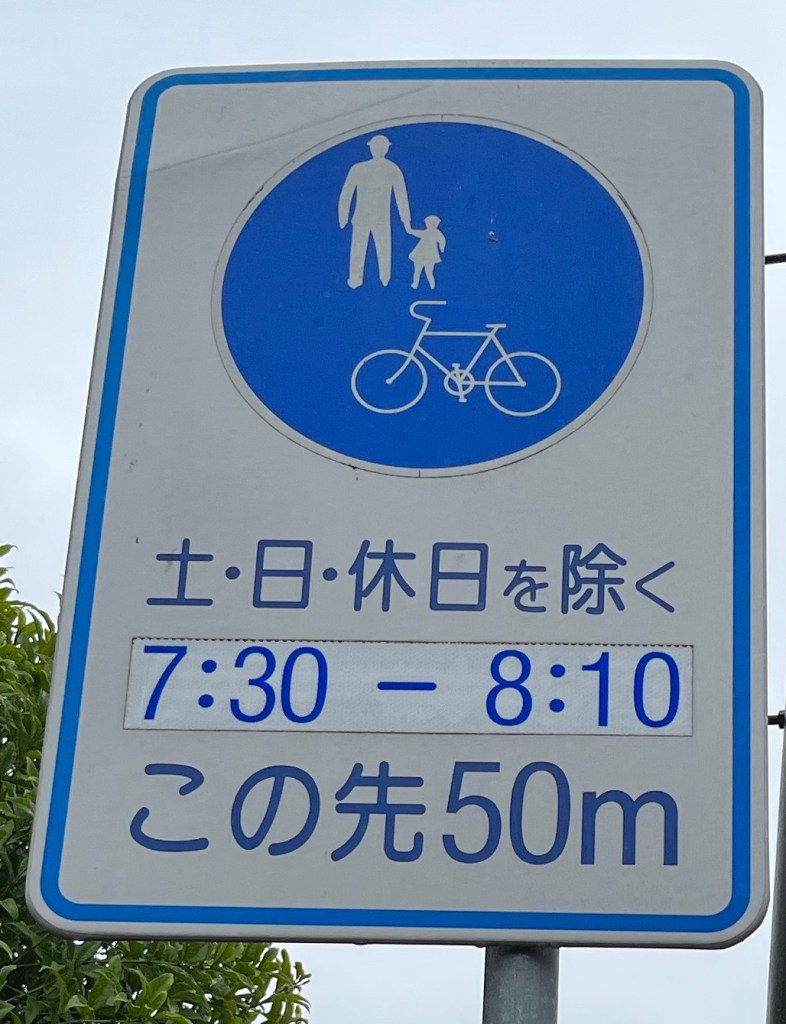
This often applies to the times when children are going to school – but in the typical Japanese way, there are exceptions. For instance, at the very times that roads are restricted to cars, the day care for elderly come and pick up their patients. And as it is unavoidable that they stop in the narrow lanes, it can even be hard to pass for pedestrians.
4. Size and weight limitations
We had not laughed as much in a long time when we found the van who very rudely had overtaken us just a few minutes before stuck in the entrance to IKEA (although we had to wait until the staff was able to redirect the traffic).
The height limitation is usually shown as a separate street sign, and it is rarely anything a tourist needs to worry about, unless you are driving a campervan (or RV, or “camping car” as the Japanese say).
The weight limitation however is something that might affect even a driver of an ordinary SUV, especially on small farm roads. Usually you have to drive something heavier to be affected. But if you are not driving a small or kei car, you will want to be mindful of restrictions you may encounter. They will be posted underneath the sign too, on the small white signs. As usual in Japan, there may be multiple restrictions that interact with each other, for instance weight restrictions at certain times.
Weight restrictions are usually written as a number followed by a t, which should be read “tonnes”, a weight unit of 1000 kg, which means a small family car will be affected if the limit is under 1.5 tonnes.
Read more about the most common road signs in Japan here.
Read more about some of the most uncommon road signs in Japan here.
5. Not Valid At Right Or Left Turn
The arrows pointing here and there are the most important ways of keeping apart the different conditions in Japanese traffic. And since arrows will show that the direction if traffic can be left or right, this means there can be exceptions.
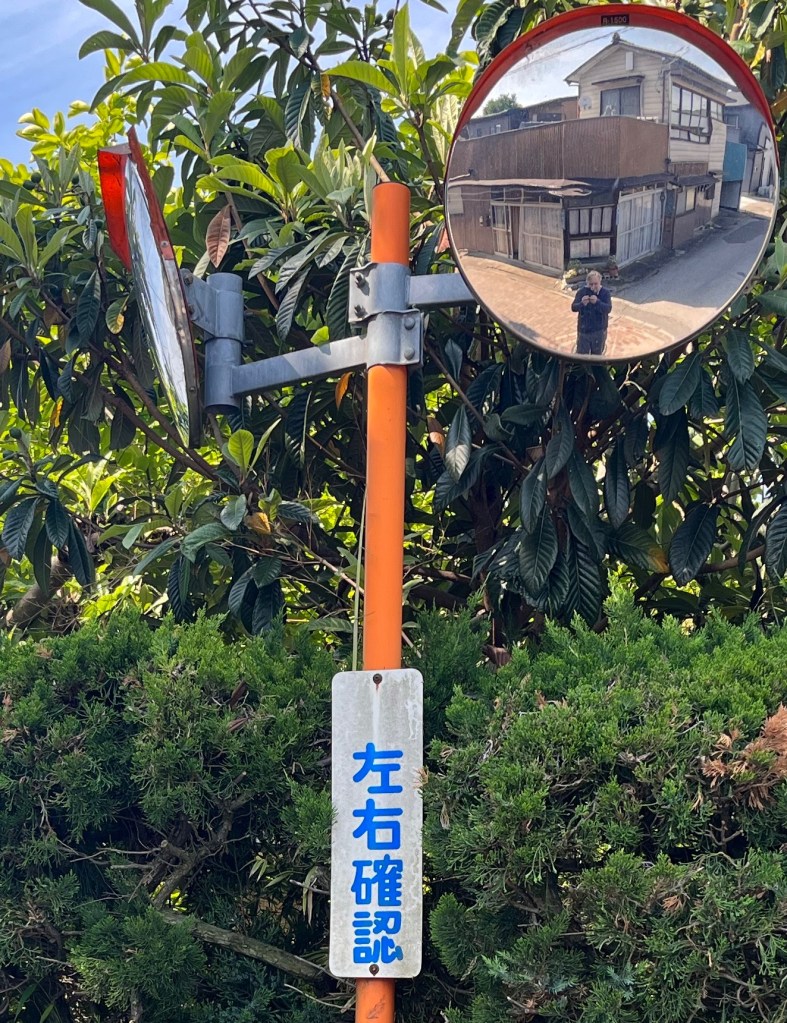
In some places, right turn (usetsu, 右折) and left turn (sasetsu, 左折), can be followed by exceptions – for instance, excepting some types of vehicles, not valid during certain times, and so on.
Did you find this interesting? In that case, chances are that you will find my book “ Driving In Japan” interesting too. You can check the table of contents at the book page, and get the book from any of the listed vendors on the Books2Read page.
 Japan Top 10