Typhoon winds can be strong enough to tip over a small car. Especially kei cars, as they are tall, with a narrow wheel base, and light. A kei car can weigh less than half of what an ordinary car will weigh, and it is taller. The wind can easily blow it off the road.
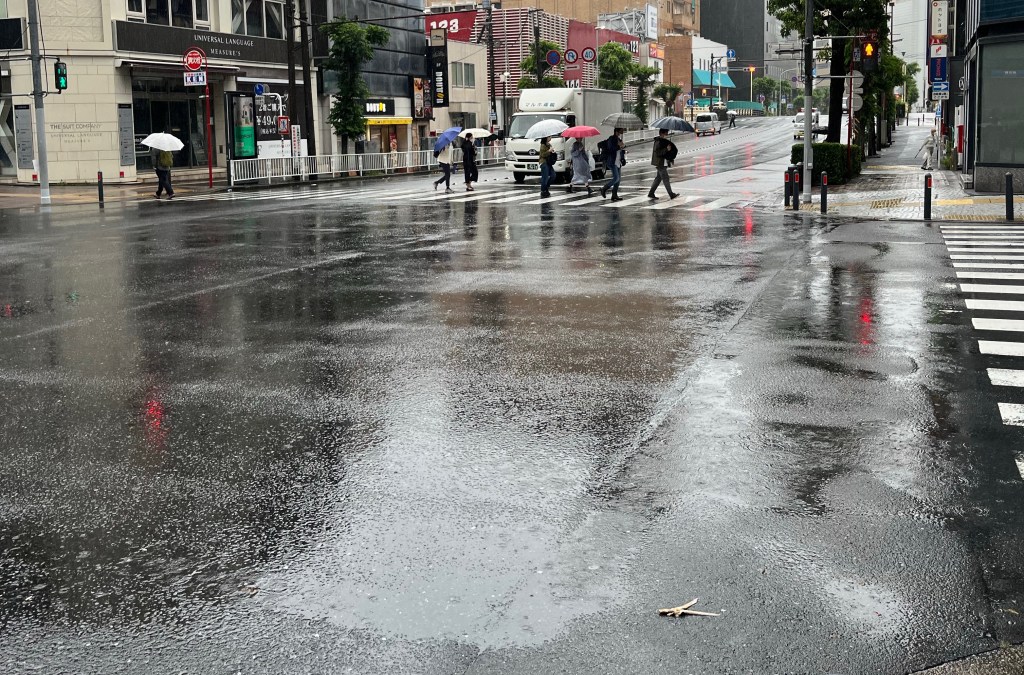
While it is hardly recommendable to drive during a typhoon, and you should stay at home during the worst wind and rain (or visit one of the underground malls that penetrate Tokyo and Osaka), you can drive as the typhoon is approaching, and while the center is passing.
1. Don’t
If you do not have urgent business, it is better to stay at home until the typhoon has blown over. They rarely last more than a day, if that, before dissolving into rain and manageable winds.
If it is completely unavoidable – for instance, if you have to drive to the airport so you do not miss your flight – slow down.


2. Stop In A Service Area
If you are on the Japanese expressways when the typhoon hits, it is safer not to be on the road while the worst of it passes. Turn into a parking area or service area to wait out the wind is a good strategy. And maybe get a coffee or meal as well.
3. Slow Down
Driving slowly decreases the risk of water planing and makes it possible to see ahead. It also makes it easier to parry sudden gusts of wind.
When the winds have subsided, the rain will persist, and it can still be very heavy. Before the typhoon itself arrives, there will usually also be heavy rain for several days.
The rain can be so heavy that you literally can not see anything through the windshield – it is like pouring water over the window with a firehose. There is so much rain that the windshield wipers simply can not remove it.
4. Check The Windsocks
At the exit of all tunnels, and entrance to bigger bridges or open areas where the freeway passes, there is a windsock. Like the ones you will find at an airport, but usually smaller.
In ordinary weather, when they are hanging straight down and maybe flapping a bit, the windsocks inspire ridicule rather than awe. But during a typhoon they will stand straight and rigid like the arms of Arnold Schwarzenegger during a competition. That is when you need to be careful and slow down. Your car may actually be blown off the road.
5. Watch Out For Flying Objects
When the wind is so strong it turns windsocks rigid, anything it gets hold of can be propelled like a projectile.
Every time there is a typhoon there are pictures on TV of the devastation, with windows crushed and roofs ripped off. You can imagine what would happen if one of those hit your car.
But if the flying objects were not bad enough, the rain will cause mudslides that may cause the roads to close. Then, you are in for some serious delays.
Did you enjoy this? Was it useful? In that case, you should know that I have an entire chapter about driving in bad weather (which means thunderstorms and tornadoes as well) in my book “Driving In Japan”. You can read the table of contents here, and you can get the book (both as pocketbook and ebook) from this link.
 Japan Top 10