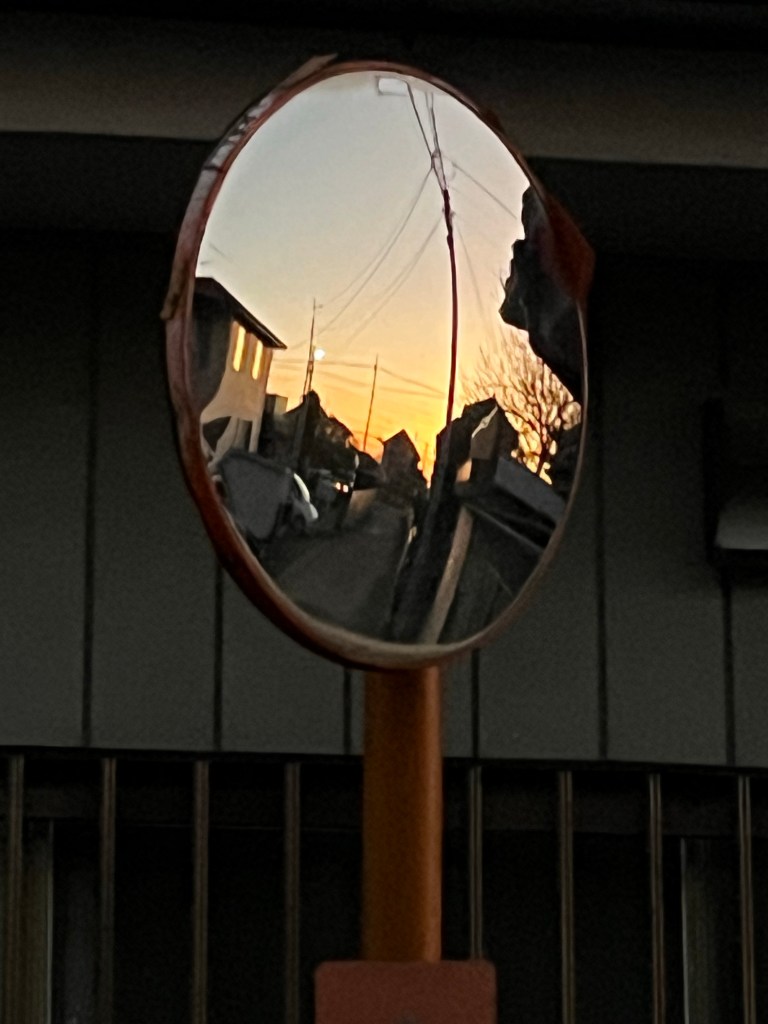
Driving in Japan (the focus of my book Driving In Japan), is surprisingly easy and smooth for such a crowded country. But when darkness falls, the country changes beyond recognition. Driving becomes a completely different story than driving in daytime.
1. It Is Really Dark At Night In Japan
Daylight in Japan during summer starts at 0400 in summer, and it does not get dark until 1930. While Japan does not quite have the white nights of Scandinavia, however, the daylight is much longer than in winter, when the sun does not rise until 0730 and sets around 5PM.
The shorter daylight hours in winter of course means longer hours of darkness, and since winter in most of Japan only means a brief snow cover, it means longer darkness. In the parts of Japan where there is snow cover – from north of Tokyo and up, most years – the nights will be brighter as the snow reflects the light.
Not that it is ever completely dark in populated areas of Japan. There is always a streetlight or shopwindow or vending machine that throws off light. Populated areas in Japan are never free from light pollution.
This makes the contrast all the larger when all light sources suddenly disappear and you get out into the countryside, or even the mountainside. When you have got away from the light pollution, it is dark. Really dark.


2. Cars With Headlights Are Much Easier To See
Darkness has one advantage: Cars turn on their headlights. That makes them very easy to see.
During twilight in particular, but also when it gets dark-ish during the day due to a gathering thunderstorm, cars without headlights shrink into the grey asphalt, at least color-wise. Grey and black cars in particular becomes harder to see when the light fades.
Many Japanese drivers are of the opinion that you do not have to switch on the headlights until it gets really dark. Automated headlights will switch on much earlier. That makes the cars much easier to see; the brake and turn signals also become evident.
3. Dogs Wear Reflectors More Often Than People
In Japan, very few people – bar school children – wear reflectors. It used to be that they were hard to find, but this has changed in the past 20 years, and reflectors are now readily available in the 100-yen stores.
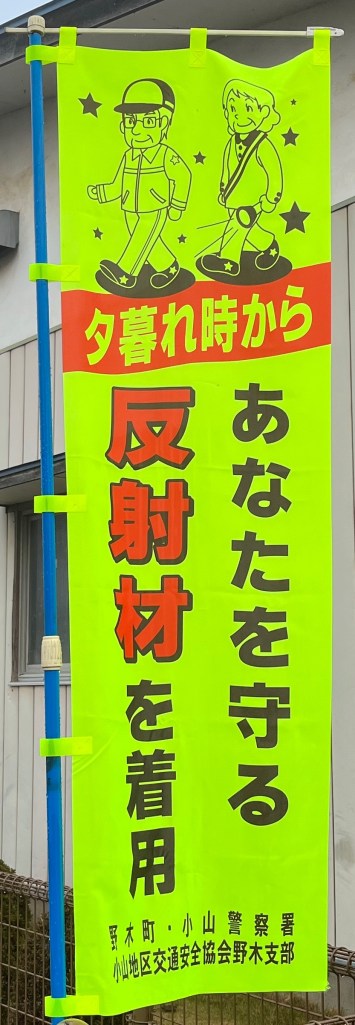
But people are still reluctant, despite the obvious value of being visible in darkness. For some reason, using reflectors is still not popular.
This in spite of people in Japan usually wear dark clothes. If you are wearing black clothes at night, you become nearly invisible; and drivers will get a chock when you suddenly lurch out into the road. Especially if you are drunk, which is one reason people in Japan walk: They are not able to drive.
Dog owners put reflectors on their dogs more often than themselves, and even blinking lights on the collars which are extremely effective in making the dog visible , even if it is sitting close to the ground like a dachshund or welsh corgi.
4. Animals Can Pop Out From Anywhere
There is a lot more animals in Japan than those dogs with the lights on their collars. Cats roam the residential areas and it is easy to forget they are nocturnal animals, not active during the day. At night, they sneak out to hunt and fight.

But there are a lot of other animals in Japan, even though you will hardly see them in the cities. In the countryside, there are tanuki and foxes, who will go out in the fields to look for small mammals and birds to eat; in the fields and forests, there are wild boar who are active at dawn and dusk. In the deep forest and the mountains, there are bears, deer, and monkeys.
Sometimes, one of those animals get out on the road, and while bears rarely are run over by a car, it frequently happens with foxes, tanuki, and wild boar. You occasionally see their carcasses on the main roads and expressways, where cars move too fast for them to avoid.
5. Watch The Width Of The Road
When there are houses at the side of the road, you can feel relatively sure that you are in the middle of the road. But when you go out into the countryside and start driving between the rice fields, you have to keep your head cool.
The rice fields are not the problem, it is the width if the road and the deep ditches on the side that are the problem. Especially the ditches. Especially if you meet another car.
Ditches on Japanese roads can be very narrow, with steep edges. Their function is to lead water to the rice fields in spring, and off the fields when there are torrential rains, which usually happens in summer, during typhoons and thunderstorms.
If your car gets into a ditch, it is not just a matter of getting it back on the road. If a wheel gets into the ditch it will get stuck, since the ditches on Japanese roads are rarely wider than a car tyre; and the edges are sharp concrete plates, not soft soil. Your car will need serious repair.
Did you find this useful? Then chances are high that you will enjoy my book “Driving In Japan”, the only book on the market that teaches you how to behave on the road in Japan. You can read more about the book, including table of contents, on my website. Or you can order it directly from your favorite store from this link.
 Japan Top 10