Japanese cities are, for the most part, old. Even if the buildings are new. But the borders between the plots of land has not changed much for the last few hundred years.
Even if there were a lot of them, humans – even carrying loads – do not take much space. The roads did not have to be particularly wide.
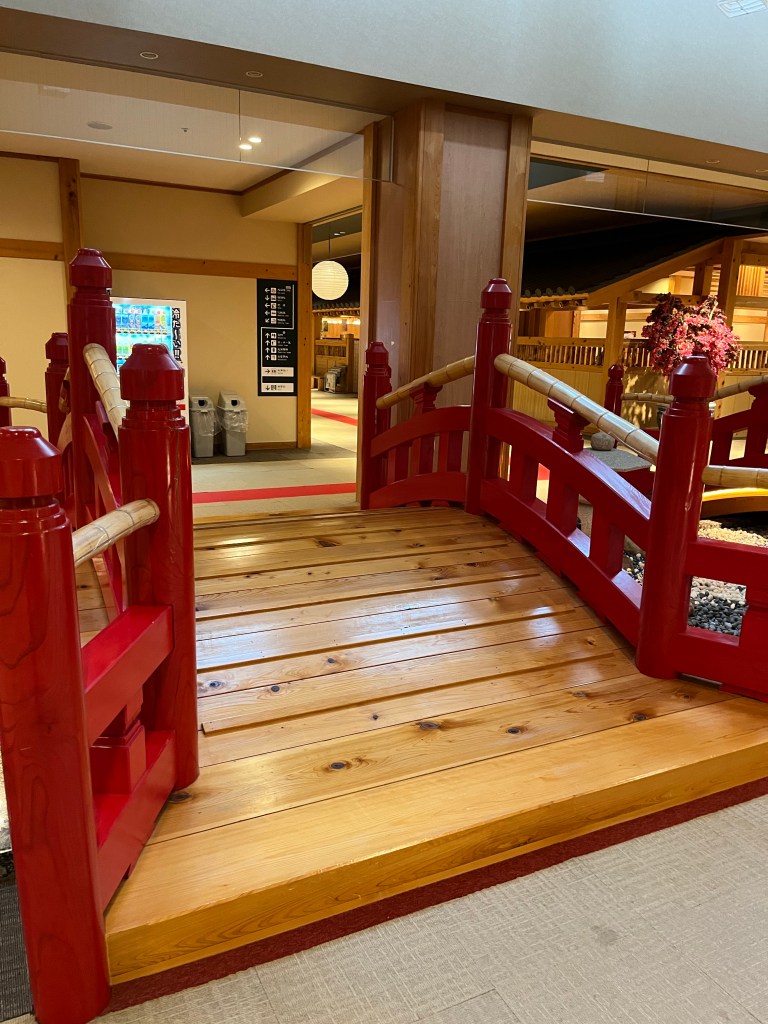
The narrow, heavily used streets (at least in daytime) means you need to look around and always be aware of your surroundings. The last thing you want to happen during your visit to Japan is to be in an accident – or even worse, cause one.
1. Watch Around Corners
Yes, and you do not have to use magic. The mirrors mounted on poles where small streets branch off the main roads may be intended for cars to see approaching traffic – but they work equally well for pedestrians who want to see what is going on at the road they are about to enter.
If it is nighttime they are even more useful, as you can se what is coming down the road without getting out into it. And at night, the mirrors let you see from a distance what is coming down the road. Cars of course, but also bicycles. And if you have a light source (if only just a red light) you will be visible to them, too.


2. Look Out For Things Protrouding Into The Street
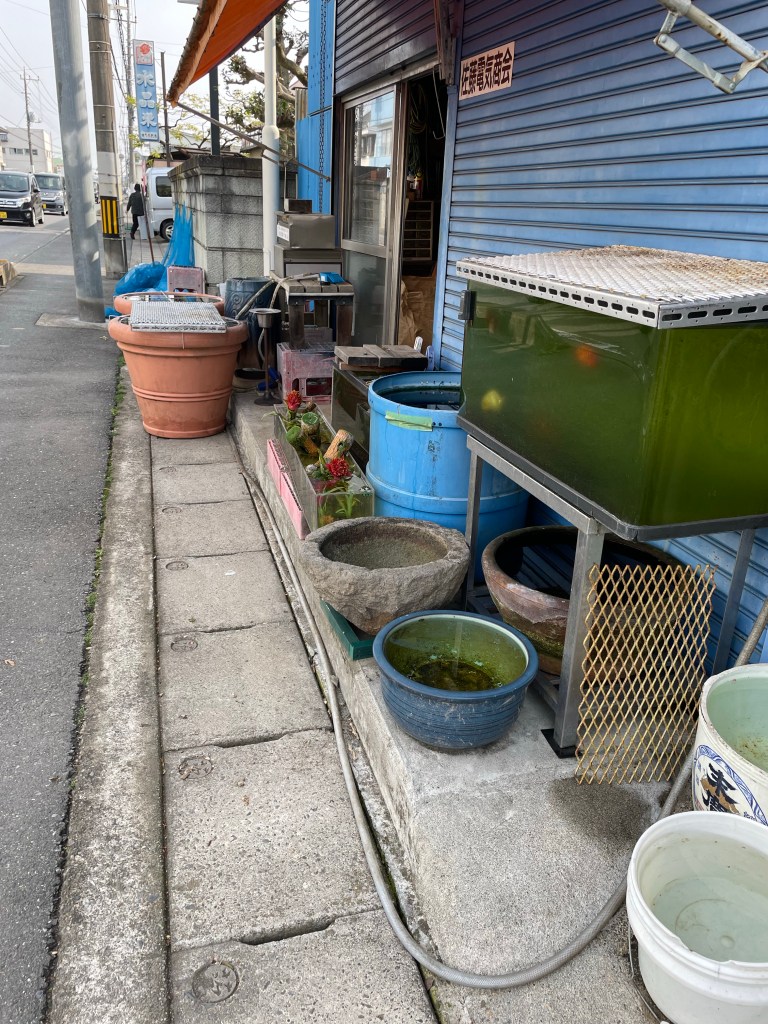
As if the streets in Japanese cities were not narrow enough, there are plenty of obstacles protruding into the street. Not only bicycles parked perpendicular to the road, but also steps and ramps used to enter properties, garbage under yellow (or blue) bird nets, flower boxes and huge basins used to breed goldfish. There is no illumination and Japanese streets are scantily lit during the night at best.
3. Watch Out For People And Animals Jumping Out Into The Street
Children in Japan are no less likely to play and run out into the street than children in other countries; and in residential areas, the street is often their playground. To drivers they are an accident waiting to happen; to pedestrians, they are a navigation hazard.
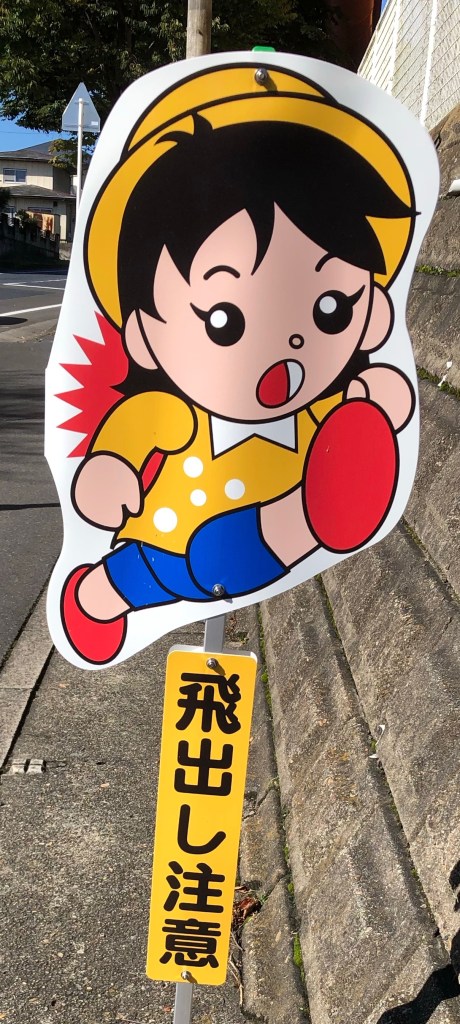
The children jumping out into the street are less likely to startle you (because they will be loud), but starting at dusk, the animals come out. Dogs in Japan stay indoors but cats come and go as they please, in Japan as well as anywhere. Even though rats (small enough to hide anywhere) are rare, there are other animals you can encounter in Japanese cities, in particular if you are in the countryside. Foxes and tanuki prowl the Japanese cities at night, but they are more likely to be startled than you are.
4. Do Not Be Blinded By Bicycle Lights
How can bicycle lights be a problem? They are not very bright, since they are only powered by the generator touching the rim of the tire.
But that was the old generation of bicycle lights. The new generation of bicycle lights in Japan are powered by batteries, so it does not matter if the bicycle is moving or standing still; and they use LED, which means they are much brighter than the old type of bicycle light.
On top of that, they often have a strobing setting, flashing to show that there is a bicycle there. As they are often mounted on top of the handlebars (or the basket in front of the handlebars), they will be shining straight into the eyes of pedestrians.
5. Watch Out For Bicycles, Especially In The Rain
The lights are not the only danger you are likely to meet from bicycles. In Japan, people will hold an umbrella while they are riding bicycles in the rain. You can even buy a special umbrella holder for use on rainy days.
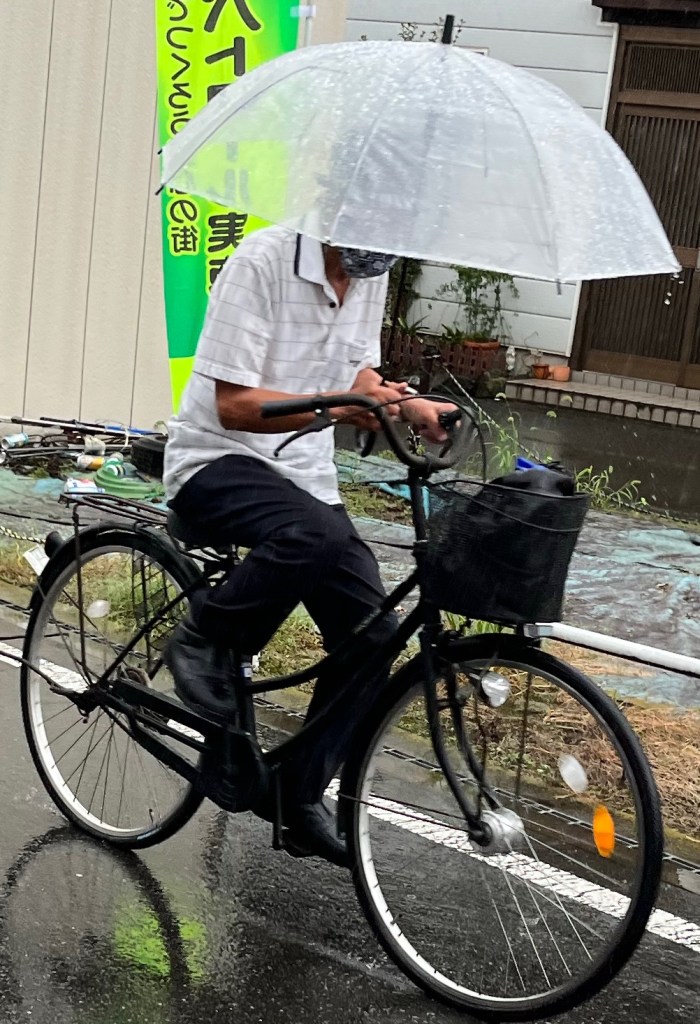
But this makes bicycles twice as wide, and also makes water gush off the umbrella onto passersby. On a crowded sidewalk, since the bicycles typically do not turn out of their way for pedestrians, you have to zigzag back and forth to avoid them. This is hard enough when the weather is clear, but when it is raining the cyclists – holding their umbrellas – will be blocking the pavement even more than on sunny days.
Not that they are any less of a danger when the days are sunny. In many places in Tokyo, the sidewalks are wide enough for both pedestrians and bicycles, and the streets are full of cars, buses, and motorcycles, making it difficult to navigate without bumping into someone or something. Especially when that something is traveling at close to three times walking speed.
The most dangerous cyclists are not those with umbrellas, however. They are the ones who are using their smartphones as they are riding their bicycles. And the ones who use earphones while riding bicycles and watch their smartphones are the worst kind.
Despite campaign after campaign, and hefty fines if you are caught, the police and authorities can not make them stop. As a pedestrian, you have to watch out for them extra carefully, as they are not able to see you.
6. On Rainy Days, Watch Out For Umbrellas
It is not only cyclists carrying umbrellas that you have to watch out for. Other pedestrians are as much an obstacle. But here, you have to be aware of the Edo-era rules for rainy days.

The Edo-era informal rules stipulated that when meeting someone in the street while carrying an umbrella, you should tip it to the left – as you would, then and now, be walking on the left side.
And in Japan, umbrellas are not only a matter for rainy days. When the sun shines in summer, you break out into a heavy sweat after only walking a few steps. Going out into the sun can be downright dangerous. So many people bring their own shadow.
In Japan, umbrellas are not just a matter for rainy days; you also use them on sunny days. Or rather, special umbrellas with a reflective surface that gives you at least a little but of shadow. And you should still tip them to the left when you meet someone who is coming from the other direction.
7. On Sunny Days, The Shady Side Of The Street Will Be Crowded
“Only mad dogs and Englishmen go out in the midday sun” as Noel Coward was singing, but even those stay off the street in the middle of Japanese summer days. The concrete jungles of the big Japanese cities can be several degrees hotter than the surrounding countryside in summer, and the heat reflected off the buildings means it feels even hotter in the sun.
This is why map applications, like the ubiquitous Navitime, will show which side is shaded. But sunny days, everyone will want to get into the shadow.
This makes the shady side of the street crowded, and the sunny side almost empty. Try to time your outings so you do not have to go out in the midday sun. And even if it is a detour, use the underground passages from the train and subway stations to get as close as you can.
8. Watch Out For Distracted Pedestrians
It is not only cyclists who get distracted by their smartphones. It is even more common among pedestrians, and they often wear headphones as well. Near-misses when people walk against red lights are common, and while it is a warning to drivers to watch carefully so they do not run into anyone, you should always check that you can walk. They may be crossing on a red light.
Meeting these distracted pedestrians may not be as dangerous as meeting bicycles, but since they are not looking where they are going, they are harder to get around.
A final piece of advice: do not be one of them. If you have to use a map application like Google Maps to get around, do not walk around with your nose glued to the screen. Not only will you miss the landmarks that show where you are going, you will be a danger to others. Stop and check the map every 100 meters or so, and when you do, move to the side so you are not blocking anyone.
9. In Crowded Places, Give Room To People
Japanese people are masters at making congested situations flow smoothly. Every day, a crowd the population of Norway pass through Shinjuku station, without anyone bumping into anyone else. That would not happen if everyone did not observe some basic rules, such as keeping to the left in staircases and elevators.
But mostly it happens because while everyone is moving in their own direction, they also yield to each other. Nobody tries to force their way through the crowd – if anyone wants to move across the direction everyone else is moving, they pass through the gaps, mmake a cutting gesture with theit hand, and bow continously in gratitude towards those they displace. Without ever bumping into anyone.
10. Do Not Stop In The Middle Of The Street (Or Pavement)
The ability to move smoothly through the crowds hinges on the ability to avoid obstacles – and not create them. To stop in the middle of the pavement disrupts the flow. Move to the side so you do not force others to stop and move around you, which means they have to change their smooth path.
While most Japanese people you see on the street – including parents with kids – move at about the same pace, there are those, especially the elderly, who move at a much slower pace. And they are liable to stop suddenly as well, causing congestion and frustration among other pedestrians. Not that this will take any more violent form than frustrated stares, which is bad enough in a society that prides itself on functioning smoothly.
Did you enjoy this? Did you find it useful? In that case, I am pretty sure you will appreciate my book, Driving In Japan. You can read the table of contents here, and get the book (both as ebook and paperback) from this link.
 Japan Top 10