You do not have to own a car to drive in Japan. There are plenty of car rental companies eager to supply you with a car.
The fees for renting a car is more expensive than in other countries, in particular if you want to tent in one place, and return the car in another.
But you get what you pay for: Superior Japanese service. Some of the rental companies even offer 24-hour service in English.
I wrote a deeper expose about renting a car in Japan here, and of course there is not one, but two chapters about renting a car in Japan in my book “Driving In Japan”.

It is easy to rent a car in Japan, but as always, there are many small things you have to think about. So here is a list.
1. Decide Whom You Want To Rent From
Japan has several rental car companies. They all work the same way, but some of them are associated with manufacturers, like Toyota (Toyota Rentacar) and Nissan (Nissan Rentalcar). Others are independent of manufacturers, like Nippon Rent-a-car, Orix Rentacar, and Times Rentacar. The latter is interesting, because they started out as a car sharing company (and still offer that service). Now, they operate parking lots in addition to the rental car business.
The rental car company with the best service in my opinion, although I have not tried all of them, is Nippon Rent-a-car. Not only do they have a good and reasonably priced selection of cars, they have an English 24-hour support line and offer coupons to international visitors.
But of course, it also depends on the local availability of cars. In popular seasons, the rental car agencies in Hokkaido and Okinawa run out of cars, especially when it comes to popular models. If the agency where you choose to book does not have cars available, it pays to look around.


2. Decide What Kind Of Car You Want
What kind of car you should choose depends on several things. The first is how many there are in your party; the second thing who you are. If you have more than two children in child seats, you need a car big enough for that; if you are five, you should get a seven-seater, which will have space for your luggage as well. Including a stroller. Or a wheelchair. Or both.
If you have big luggage like surf boards, skis or mountainbikes, the seven-seater minivans that are popular with Japanese families, like Mitsubishi Delica, Honda Stepwgn, or Nissan Serena will have enough space. But you may have to choose between that much luggage and children.
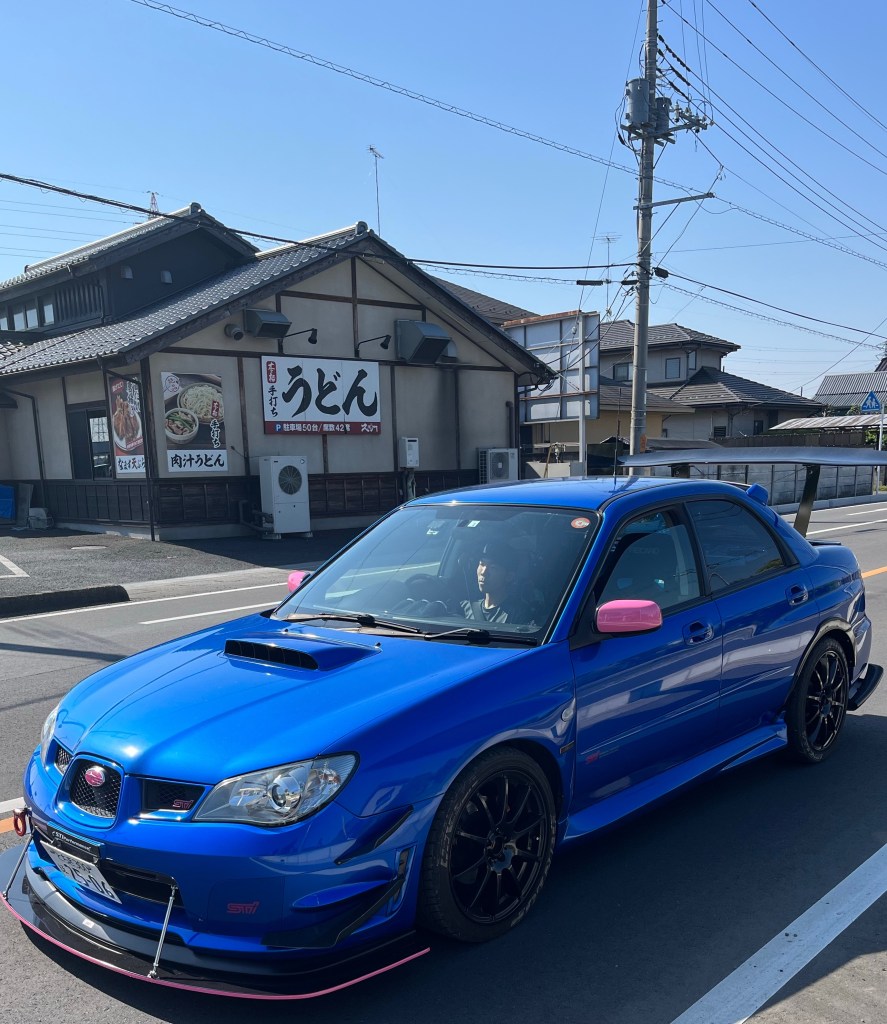
Regardless of what kind of car you choose, you should not choose the gasoline model (unless you are driving for fun). Most Japanese cars are available as hybrid cars and gasoline models; they are different to drive but the hybrid cars use less than half the amount of gasoline compared to the gasoline-only models. Since the price of gasoline in Japan is high in an international comparison, this pays off quickly.
By the way, another tip for international travelers is to buy your gasoline at Costco. They not only have the cheapest gasoline in Japan, they also have warehouses all across the country, and they honor international membership cards.
3. Choose Your Extra Equipment And Services
You will need several things provided as extra equipment. If you are going to the snow country, snow tires and a ski rack. Ski racks for rental cars are not available from all companies, and then only in Hokkaido.
If you have kids, you will need child seats and potentially booster cushions. Children under six years of age have to sit in a child seat, unless they are so sick they have to lie down on the seat. And after six, they have to use booster cushions until they are physically large enough to use seatbelts (or turn 12).
And if you want a four-wheel drive and a non-smoking car, that is extra equipment too.
But the potentially most useful type of extra equipment you can get is the ETC card, that is debited wirelessly when you pass through an automated exit gate. On the big interchanges there are both automatic and manual gates, and with an ETC card you can go through the automated gates. But there are plenty of entrances and exits on Japanese roads which do not have a manual gate. Usually they are connected to parking areas. Often, those are much more convenient for your destination than the big interchanges. And you can not go through them without an ETC card.
There are ETC cards that give regional discounts on the tolls as well, as tourist promotions. When you book your ETC card, make sure to ask about this as well.
If you plan to drive in the snow country, you need snow tires. If you rent a car in Niigata or Nagano, or anywhere in Tohoku, they will put on snow tires as a matter of course during winter. But in the Kanto and Tokyo area, there is almost never any snow. Snow tires are strictly extra equipment. You have to ask for them if you plan to go north (or west).
4. Book The Car
Once you have decided in the type of car you want, when you want it, and the extra equipment you want to use, you can book the car.
In practice, you just fill in your detail and those of the car and extra equipment you want on the website of the rental company, fill in your personal details and your credit card information, and you are ready to go.
5. Pick Up The Car
Up to now, your interactions with the car rental company have been entirely in the abstract. You have been looking at photos and filled in forms on a computer. Now, it is time to get real. And pick up your car.
First, you need to know where to pick it up. Your rental will be tied to a physical office, but you have to find it. And that is not necessarily all that easy.
If you are picking up your car at an airport, you only need to know the name of the rental agency, and get on the right bus. The rental car office shuttle buses will take you to their office.
But if you are trying to find the rental car offices somewhere else, like around the train station in a big city, there are no buses. The rental car offices near Japanese train stations are not at all very close to the stations, often several blocks away and on side streets. In the really big cities, like Tokuo and Osaka, they can be tucked away somewhere on one of the floors of a parking garage.
Since the location is not quite clear, it is easier for you if you find it out beforehand. Check the location before you go, including which exit from the station you should take. If you have more luggage than you can easily carry (or roll) or if it is raining, leave someone with the luggage and the kids and go look for the car rental office. Choose an exit with easy car access, so you can pick them up when you have got the car.
And then trudge off to the rental car office. Usually it is not far. If it is raining heavily, you might want to take a taxi (an option if you want to bring the rest of your party along as well).
Usually, you will have to wait until the office person has finished servicing the previous customer. Then you show your reservation, and hand over your passport, drivers license, and International Driving Permit (and potentially the translation of your drivers license, if you come from a country where that is required to drive in Japan). And your credit card, since it will be required to guarantee the transaction, even if it is only charged when you return the car.
6. After Pick-Up Test
When you have taken possession of your car, you would probably like to tip your hat at the attendant, turn on the stereo, roll back the cab, and hit the open road. Unfortunately you have some more work to do first. And did I not just recommend you to get a family car?
As a driver in Japan, you are responsible for the car and everything that happens inside and around it. And no matter how supremely competent the Japanese rental car companies are, as the person responsible you have to make sure that everything is working as it should.
That means you need to check the function of the car, but not only that. You need to be aware where to find the insurance papers and other documents needed when the police want to investigate something related to the car.
The rental car agency attendant will show you where to find the documents (usually in the lower glove compartment). They will also show you where the drive recorder is located (you do not need to do anything to start it other than starting the car). It will record anything on the cameras connected to it, as well as the sounds from inside the car (remember that if you plan to have an argument).
But apart from that, you need to check the lights and signals, which are the most important part of the car from the purpose of communication. If they do not work, you risk causing an accident. So it is important to check that they work properly. Including break lights and back lights.
7. Understand The Navigation System
Your car will most likely be equipped with a navigation system. This is a standard feature in Japanese cars, as you really need the navigation system to find your way – especially to individual addresses.
The navigation systems in Japanese cars are updated regularly (every 30 minutes), so they can keep track of where there is a traffic jam (based on the position of other cars). Often, traffic jams have time to dissolve before you get there. The navigation systems in Japanese cars are not updated as often when it comes to new roads and bridges, so you can find yourself driving over an empty spot on the map.
Without a car navigation system it is next to impossible to find your way. Using paper maps is no longer an option, and you can not use your mobile phone as a driver, even to navigate (it is OK if a passenger uses it, though). So you need to use the mobile.
As you have to use the navigation system, you might as well figure out how to input your destination. And as luck would have it, there is one simple way: use the phone number.
All Japanese car navigation systems have the option to put in the phone number if the business you are going to, which of course works fine if they have a fixed line phone (but as most Japanese businesses still use fax, they need phone lines for those). The database is not updated all that often, so occasionally you get directed to the old address of the business. But those times are exceptions.
8. Drive Extra Carefully The First Days
You are extra prone to making mistakes while you are driving if you are distracted. Or tired. When you are jetlagged, your brain does simply not work as well as it does when you are woke and alert.
Japanese traffic, with the exception of the expressways, demand the complete attention of the driver at all times. You can not relax. But that you have to stay alert – and remember which side of the road you should drive on – does not become easier if you have to fight a cloud pressed into your brain. The more tired you are, the worse you will perform as a driver.
I have written several chapters in my book “Driving In Japan” cautioning about not only distracted, but inattentive driving. you really need to stay on top and pay attention all the time when you are driving in Japan. If you are curious about what else is in the book, you can read the table of contents here.
9. What To Do Before Returning The Car
Japanese rental car companies are surprisingly relaxed about the state of cars when returned. If course, you need to shovel out the worst junk, and make it reasonably clean. But you do not have to wash it.
What you do have to do is fill it up, so it has a full tank of gas. There is almost always a gasoline station near the rental car company offices, but while you should fill up the tank before returning the car, you do not have to return it at 100%. If the car is full to 95 or even 90%, that is sufficient. So you can find a cheaper gas station a little bit further away.
Any scratches or dents that you may have made, you also have to pay for. The attendant will take you around the car to check if there are any new bumps or dents that need to be fixed. Even if you have added as much insurance as you were able to, there will always be some money to pay. So drive as carefully as you can, so you do not risk any added payments.
10. Returning The Car
And then you just have to pay. Japanese rental car companies charge the credit card of the driver in full when you return the car.
Renting cars is easy and driving is fun (as long as you remember to stay on the right side of the road, which is the left in Japan).
Did you find this useful? Then chances are that you will find my book “Driving In Japan” even more useful. It has not just one, but two chapters about renting cars in Japan.
 Japan Top 10