Tokyo was built on a swamp at the edge of a plain. The biggest plain in Japan. Thanks to the access to water, the Kanto plain became the granary of the Edo era. When Japan industrialized, the plain became the location of huge factories and distribution centers.
This plain may be easily accessible for the many trucks which daily criss-cross the area, but it is pretty boring to drive, and while there are some interesting museums and buildings (and, actually, factories), the Kanto plain is one of the most boring places in Japan.
1. Start With The Train
That the Kanto plain is so boring, and the famously complicated and slow Tokyo traffic, is why you should avoid driving there. Which means not starting from Tokyo, but from an outlying location. There is another advantage of this: you can start your trip with a head start.
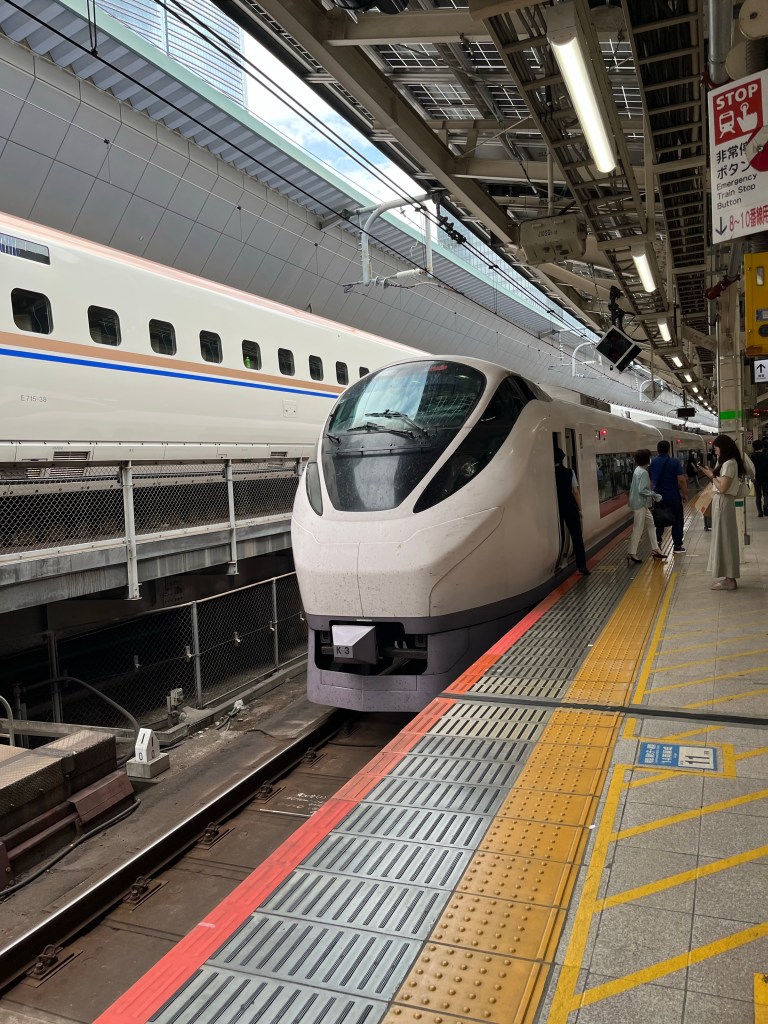
The earliest rental car agencies open around Tokyo Station is 0700, but that is only Nippon Rent-a-car. The others open at 8. So by starting early, and leaving your hotel around 6, you can catch the Shinkansen at 7, and be in Utsunomiya an hour later, or Odawara in 30 minutes. Going to Funabashi in Chiba also takes 30 minutes. It is easier and more fun than sitting in a traffic jam, creeping out of Tokyo at a snails pace – and arriving in Odawara or Funabashi at 8, or Utsunomiya at 9, when you started at the same time as with the train.
So this means the road trips I talk about here should all start with a short leg on the train. It makes the best use of your day.
2. What And Where Are The Sights? And When?
There were travel guides describing the hundred most famous sights in Japan as far back as the 18th century. Even though the ruling samurai enforced the ban on general travel imposed by the shogun, it was possible to get a permit to travel, and in particular to visit temples as part of a religious pilgrimage. Often located at places famous for the views. The islands of Matsushima outside Sendai has been one of the most famous destinations in Japan for almost 200 years.
And those are only the famous sights. Japan is dotted with thousand-year-old temples, castle ruins, the remains (and sometimes actual) samurai houses, war memorials, industry memorials, out-of-the-way art and crafts museums, and the remains of small trading cities where your imagination has to fill in the gaps between the still standing storage houses.
Other places are humdrum most of the year, but when the season strikes, they become tourist magnets and strikingly beautiful. Usually either in spring, for the cherry or ume blossoms, or in autumn for the fall colors.
Many places, especially in the Tohoku area, are equally famous in winter. The snow monsters of Zao appeared in the ancient guide books, and the Kurobe road is famous for being cut through a snow drift more than three floors tall. But today, the reason people go to the mountains is not to see the sights, it is to slide down again. On skis.
It is perfectly feasible to go overnight skiing on a one-day road trip outside Tokyo, if you go on late January or February, when there usually is snow in the mountains.
But you need to be able to drive in snow, which is not so easy if you have never done it before. Even with snow tires. Winding mountain roads with a car full of family is a bad time to start. Besides, many smaller mountain roads will be closed (although not to the ski resorts).
Other sights are equally seasonal, and Japan is of course famous for the cherry blossoms. Around Tokyo, the flowering season is even longer, starting with the ume trees in February, and ending with the wisteria in May.
Mostly, with the exception of some famous spots such as the cherry blossoms along Meguro river and the Chidorigafuji moat, the famous flower spots are outside Tokyo – the shibazakura are in Chichibu in Saitama, the biggest wisteria in the world is in Ashikaga Flower Park in Tochigi, and the largest ume garden is in Mito in Ibaraki. This means they are perfect destinations for a day trip. If the weather is nice.

3. Know What Is On The Way. Including Toilets.
A roadtrip is more than transport from home to destination. It is about seeing and experiencing what is on the way. If you were only interested in the sights and not the trip, you could take a bus tour (which is very popular in Japan). The tour companies are very experienced, and many organize tours for foreign tourists, now that they are coming back.
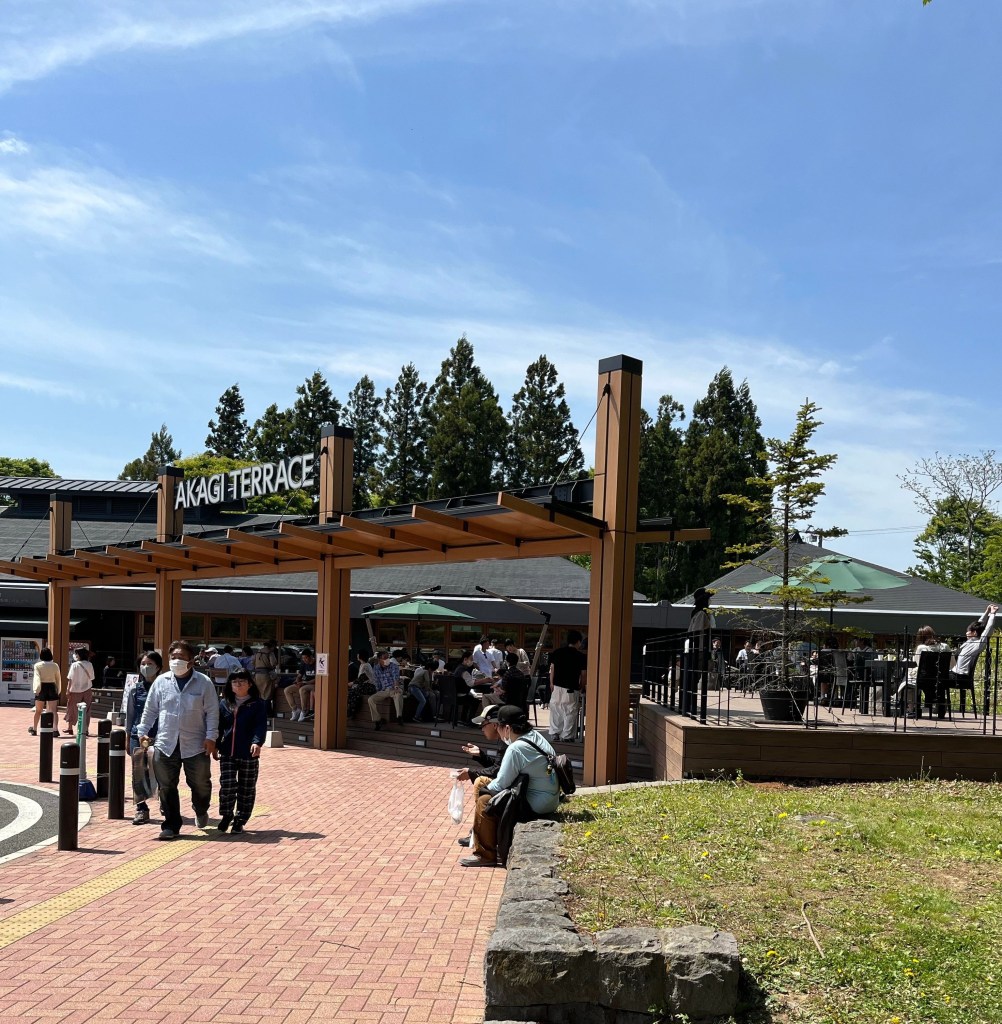
But a tour company can not take the whims of your passengers into account, including when they need to go to the toilet. Japanese tour companies have also honed kickbacks to a fine art, getting customers to pay them twice. Which limits the number of available destinations and locations considerably, offering a standardized if slightly boring fare.
When you are responsible for your own road trip, you are doing much more than transporting people from point A to point B. While you, like the tour company, need to have a schedule for the trip, your itinerary should be much more flexible than that of a traditional tour company, especially if you have children or seniors in your group.
You also need to take into account not only where to fill up or charge your car. You also need to make sure that you have enough gasoline or charge so you can get over the mountains, or that you know where the last filling station is, and how to fill up accordingly.
And that not only goes for your car. While the car needs fuel to work, your passengers need fluids if you do not want them to protest. Especially in summer and winter, the air conditioner and the heater will dry out the mucal membranes of your passengers and make them thirsty.
So you had better provision yourself with water (at least) before starting the trip. You can get it at the same convenience store where you ask them to go to the toilet before the first long leg of the trip. It should be enough with a liter per 4 hours. Smaller bottles may be more convenient, but watch out if you buy carbonated drinks and accidentally shake them. Then, they may spray the entire interior of the car, unless you open the cap very carefully, so the carbon dioxide can escape quietly.
When you choose drinks, try to select something as pure as possible, without sugar or flavoring like fruit juice. The reason is that sweet drinks actually make you more thirsty after a while. Tea (without sugar), water, and sports drinks like Pocari Sweat or Aquarius that replace minerals used in the sweat are much better, as you do not want your passengers to drink too much and force you to take frequent rest stops. You also do not their stomachs to be too full from eating snacks, especially if your route involves winding mountain roads. That can have disastrous results if they are motion sensitive. Unless you want your passengers to be loaded to the gills on Dramamine (or one of the local motion sickness medications), you are better off if they do not eat so much that they will throw up at the first hairpin bend.
But you do not only need to pay extra attention to where your passengers can relieve themselves. While not paying attention to this can ruin any road trip, you need to know not only where to find public toilets along the route (which can be tricky in sparsely populated areas – exactly where the sights can be found), you also need to know where other rest facilities are. Including where to have lunch. But that is a separate section.
You can read more about driving conditions in Japan here.
4. Watch The Weather Forecast
There are certain seasons in Japan when you will not want to go on a road trip. Driving in a typhoon is nobody’s idea of fun, and a thunderstorm is no less terrible, only the winds strong enough to tip over your car missing.
But even during the rainy season around Tokyo it does not rain all day, every day; and even during the typhoon season, there are typhoons only once every few days. In winter, there is so rarely snow in the Tokyo area that rental cars do not come with snow tires as standard equipment. That can be a problem and is a reason to rent your car closer to your destination in winter. In the mountain areas, snow tires are standard.
If you go into the mountains, the snow tires will be really useful, especially on days (or after nights) when the temperature drops below freezing. When it rains and the ground is freezing, ice slicks can form, and driving can be really treacherous. When the snow is melting, the meltwater can freeze and cause ice slicks, too.
The reason you want to check the weather forecast – and have some flexibility in your planning – is the changing weather in Japan, especially in spring. During March, temperatures can oscillate from 25 degrees centigrade to 5, and there is frequently risk for rain (which is one thing that makes the temperature drop).
In spring and fall, the mountain regions are liable to thick fog – so thick that it is impossible to drive fast, and your car has to crawl slowly. It will be mentioned on (or visible in) the weather forecast, and you need to make your plans accordingly. Usually, the fog banks will disappear around noon, but it happens that they stay around all day.
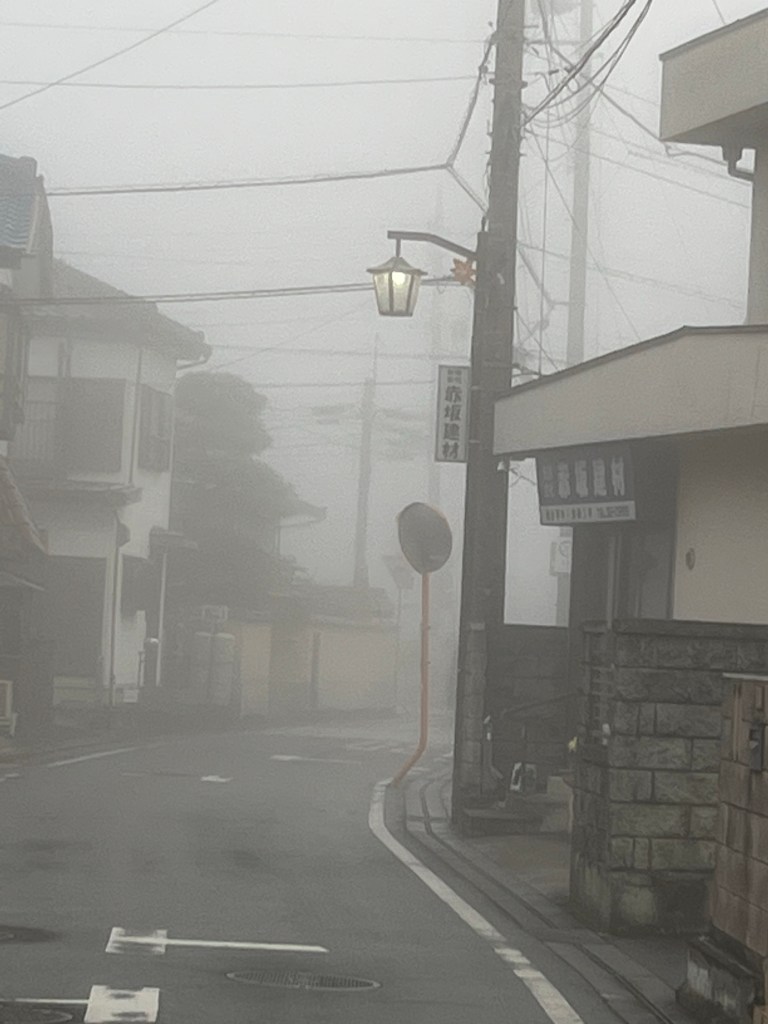
Weather can change fast during other seasons too, in particular summer when thunderstorms can brew literally out of nothing; and winter, when mild days can turn into snowstorms. So always be ready to change if the weather seems like it will turn bad.
A good roadtrip day starts out cloudy and stays cloudy until you arrive at your destination, which will be around 10-11 if you are following my advice. Then the sun breaks through and it is beautiful sunshine until it is time to head back around 4 PM, unless you have decided to make it a two-day trip. In that case, it is time to check in at your ryokan, get pampered by the staff, soak in a hot spring and eat a fabulous meal, and discover what travel in Japan really is about.
Unfortunately, the weather forecast rarely fits that exact pattern, even if there will be days that do. But do not wait for them. If the day looks decent, go for it. The good thing is that recently weather forecasts in Japan have turned more and more granular, and give you hourly forecast with decent accuracy, including the risk for rain (or snow).
In the Tokyo area, there are only single days – during typhoons, and snow days – when the weather causes significant driving problems and congestion. In the nearby areas, the weather can make driving difficult for longer periods of tile, especially during spring and fall.
If you plan to drive on the next day after your overnight stay, you had better hope that it gets cloudy in the morning and sunny around lunch, so you can repeat the same pattern. Except you have to soak in your bathtub when you get “home”.
Do not try driving in a typhoon. Read more here.
5. Plan Your Car Rental
When you rent a car in Japan, you are expected to return it where you rented it. If you want to return it somewhere else, you will have to pay a quite steep fee. To avoid that, a road trip in Japan is usually a loop, unless your itinerary is extremely tight and you are not able to plan for a loop roundtrip (which really should include one or two stays in a rural onsen ryokan). Here is where renting with Nippon Rent-A-Car, who offers significant discounts for foreign visitors, and a membership in JAF, which also gives significant discounts, will come in handy.
Planning the itinerary of your trip is something entirely up to yourself, but there are several aspects of the car rental which contain legal requirements that will be out of your control.
The first is snow tires. As I mentioned above, snow tires are a legal requirement in the snow country – roughly north and north-west of Tokyo. If you rent a car there, the snow tires will be included in your rental. But if you rent a car in Tokyo, where there rarely is snow, you will find that they are considered extra equipment (and not included in the rental).
If you have children, there is another type of extra equipment that you are legally obliged to get. That is child seats.
From birth and until age 6, children traveling in cars in Japan are obliged to use child seats. After that, they have to use booster cushions until they are physically big enough to use the seatbelts properly, or until they turn 12.
Children of European extraction tend to be much bigger, or at least taller, than their Japanese counterparts. This usually means they do not need the booster cushions as long as their Japanese counterparts.
The potentially most useful type of extra equipment you can get for your rental car is the ETC card, that is debited wirelessly when you pass through an automated exit gate. It makes your trip very much smoother, but it can be tricky to keep track of the payments you have made (which will be charged back to your credit card).
You can read more about renting a car in Japan here.
6. Gourmet-Plan Your Trip
If there ever was a nation of foodies, it is the Japanese. Finding the most cost-efficient gourmet experience is a national sport, and Tokyo has (or had, at one time) more Michelin-starred restaurants than Paris. And that goes not only for the haute cuisine such as sushi and teppanyaki, but also for “BQ Gurme”, which relates to the haute cuisine like Scotch eggs to Eggs Benedict.
Every small town has its own speciality, and there is usually a “michi no eki”, which translates as “road station” that will sell the specialities and usually have a cafe where you can try them.
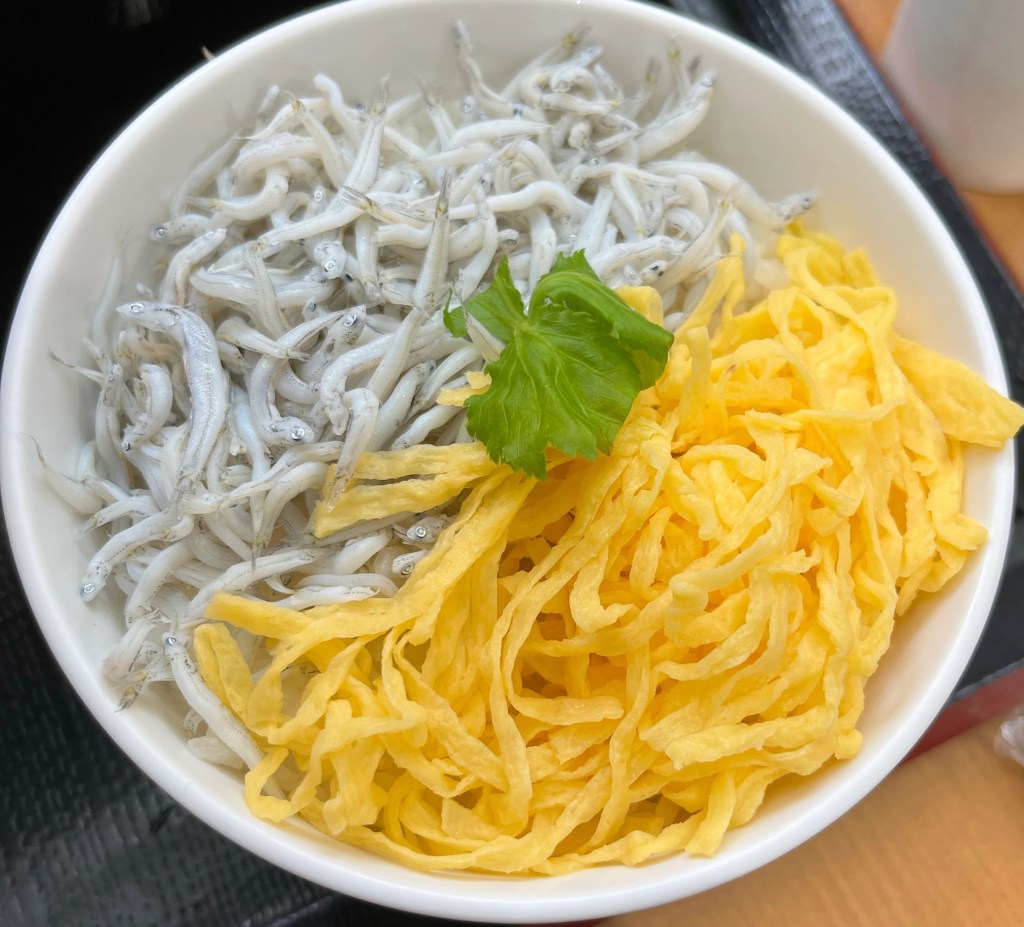
The specialities range from different kinds of noodles (which often look surprisingly similar), to different kinds of rice, and meat, milk, and cheese from local cattle; and different kinds of senbei rice crackers, popcorn, and potato chips.
There are always some restaurants in the area who specialize in the local cuisine. The Japanese take great pride in their local cuisine, and the locally specialized restaurants are popular with the locals, who also realize the need to support their local vendors.
Other meals can be combini onigiri, the triangular rice balls you will find in the cold display stand close to the registers. They also make a perfect snack. But they are standardized all over Japan, and you will be hard put to find local specialities in the convenience stores.
7. Plan To Stay Overnight
One of the most sumptous experiences in the world is to avail yourself of “omotenashi”, the Japanese art of hospitality. And the best way to get the omotenashi flowing is to go to a ryokan.
Japanese ryokan are traditional inns, usually located at hot spring resorts. The board includes breakfast and dinner as a rule, and if you did not get it, you will be sorry for the rest of your life.
Staying in a ryokan involves being pampered, but in a very professional and grownup way. It feels a bit strange to let someone take care of you and attending to you at first, but this is very much what the ryokan experience is about. Having someone prepare your bed, your meal, and making sure you are relaxed is a relaxing experience in itself.
As the ryokan usually are in hot spring areas, they include a hot spring bath. Hot spring baths are relaxing in themselves. In a Japanese bath, you do not only clean your body, you will also relax your soul.
The meals in a ryokan are not just meals, they are celebrations of the local specialities. Usually, there is some meat, fish, various pickles, of course rice and miso soup. Often, one of the dishes is cooked at your table (over a hot candle).
If you have food allergies, religious restrictions, or am a vegan or vegetarian, let the ryokan know in advance. But do not try to skip the meal because it is expensive. Eat cup ramen in the car for lunch instead. The ryokan meals are an integrated part of the stay and you should enjoy it.
8. Use (Google) Maps
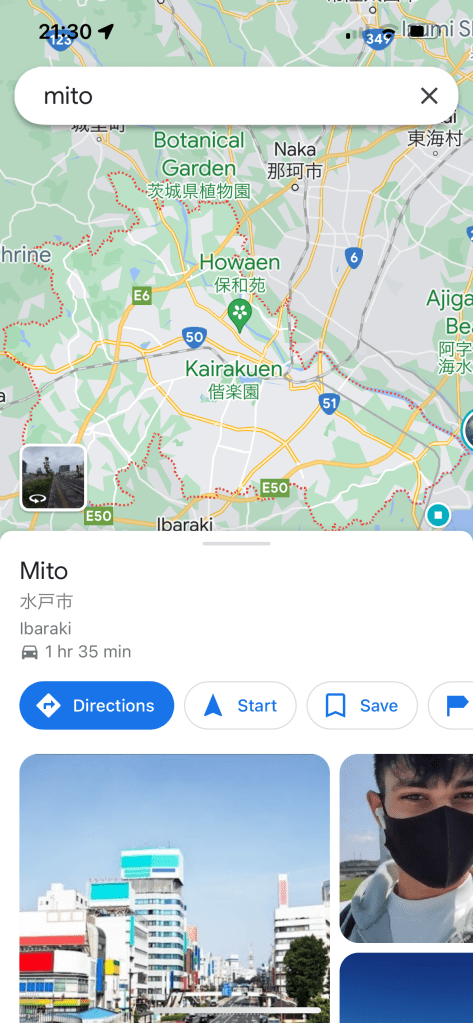
The easiest way to plan your trip is to look at a map. But while the static maps that you fold out over the table has its charm, there are better ways to do things now.
There are several very good map applications, not just Google Maps, but also Bing Maps, Apple Maps, and the local Japanese Navitime. Out of these, the Navitime has the best maps and search function, and cool features like showing you which side of the street is in shadow, at least in big cities. It is very handy on hot Japanese summer days, but only available in the Japanese version.
The map applications will all suggest a route to your destination, and tell you how far it is. The time they give is dependent on the assumed traffic conditions, which means any number they give should be taken with a big pinch of salt. Neither Google, Apple, or Microsoft can predict the traffic conditions in the future, no matter how good AI they may have. Use it with caution and do not try to base your trip planning on their predictions. If you do, your kids will throw up in the back seat, and there went your calculations.
The map applications will usually give you different route suggestions, and as a rule, you can set if it should include toll roads or not. If you are planning a scenic road trip, you will want to switch off toll roads (usually in the settings inside the app). Otherwise, you will be paying for a boring, albeit convenient, sequence of bridges and tunnels which does not let you see much of the countryside.
What you need is the number of kilometers, for two reasons: If you know the capacity of the gasoline tank of the car you have rented, you can use it to predict when you will need to fill up (and which may be the nearest gasoline station). And if you do not have free miles on your car, you can check if you will have to pay extra since you will be driving extra kilometers.
This is why you should make a modular itinerary. But at the same time you need to be aware of the constraints. You need to know where places on your route are to be able to switch between them.
There are two more way you can use Google Maps (and Bing). The first is to check the facts about your destination, such as opening hours and where the parking lots are. It is no fun to arrive at an attraction you have been looking forward to see and find that they are closed for renovation, so always check their website in addition to the listing in Google Maps, even if Google actually tries to check themselves as well.
The other way is to check reviews. Google Maps are not just maps, it is a library of reviews from people who have seen the things you will be passing and had opinions about them. Not all opinions will agree with yours, and some reviews will clearly be biased. But once there are twenty or so reviews the spread becomes big enough that the opinion of previous users become reliable.
9. Provide Back-Seat Entertainment
If you are the family member doing the driving, chances are you have forgotten what riding in the back seat of the car is like. I know I would not fit in there any more. But do the experiment of squeezing in. You will be surprised at how little you can see from there.
This is one reason you need to plan your road trip with frequent stop at interesting sights. Plowing along the highway at 100 km per hour (where allowed) does not do much for the entertainment of your passengers. They will hardly be able to see anything through the back-seat windows.
That is also a reason to give them something to do. A tablet with movies is perfect, or even better TV series that are easy to interrupt when you stop to enjoy the sights. Just make sure they have headphones so you do not get any disruptive sounds.
10. Enjoy The Trip, No Matter What
If your kids go into the car with sour faces and complain that they are bored and that nature smells differently than the city, chances are neither they nor you will have an enjoyable road trip. You have to set expectations and communicate your plan, so they have an idea about what will happen. Disappointment, after all, is more a function of unfulfilled expectations than anything else. And make sure to do it well ahead of time, so they can let the idea sink in.
Did you find this useful? Then chances are that you will find my book “Driving In Japan” even more useful. You can read the table of contents here, and get the book right away here.
 Japan Top 10