It is easy to set up your road trip in Japan, but it is easy to make some simple mistakes that will ruin your experience. Here are ten things you should avoid when you are planning a Japanese road trip.
1. Overplan And Underbudget
Japan is a country where the trains are on time, to the second. Drivers apologize for delays longer than 30 seconds and there is a TV show about a detective who solves his cases by checking the time tables to see how the criminals could have transported themselves.
Do not make the mistake to think that it is possible for drivers to schedule their travel the same way. Especially on small roads, driving takes longer and is much more unpredictable than on the expressways. But that is also where you will see the most. Give yourself a wide margin.
That goes for your budget, too. Japanese roads are full of interesting places to stop, and even if you can look up the price of everything online, that does not necessarily mean you have everything covered.
2. Forget Where To Park

Not just where you parked, but where you can park. While your car may be hard to find in a shopping center parking lots, it will be even harder to find parking lots near the attractions you are going to. And they may be paid parking. In the city centers, extremely well paid, not to say overpaid. Parking prices can go down several hundred, if not thousand, yen if you look for parking a bit further away from the main train stations.
But the biggest difficulty in finding parking is not near train stations, but near events. A semi-abandoned place like the Naruko Gorge in northern Miyagi becomes a sightseeing hotspot when the fall colors break out. It is the same with places famous for cherry blossoms, like the Shiroishi castle ruin park. Where there will be fields of open parking spaces off-season, during the sightseeing season there will be guards helping you find spots, and long lines of cars waiting to stop. And the walkways and paths where you can see the attractions will be crowded beyond belief, because everyone wants to take the chance to see it. Especially on weekends.

3. Take The Long And Winding Road
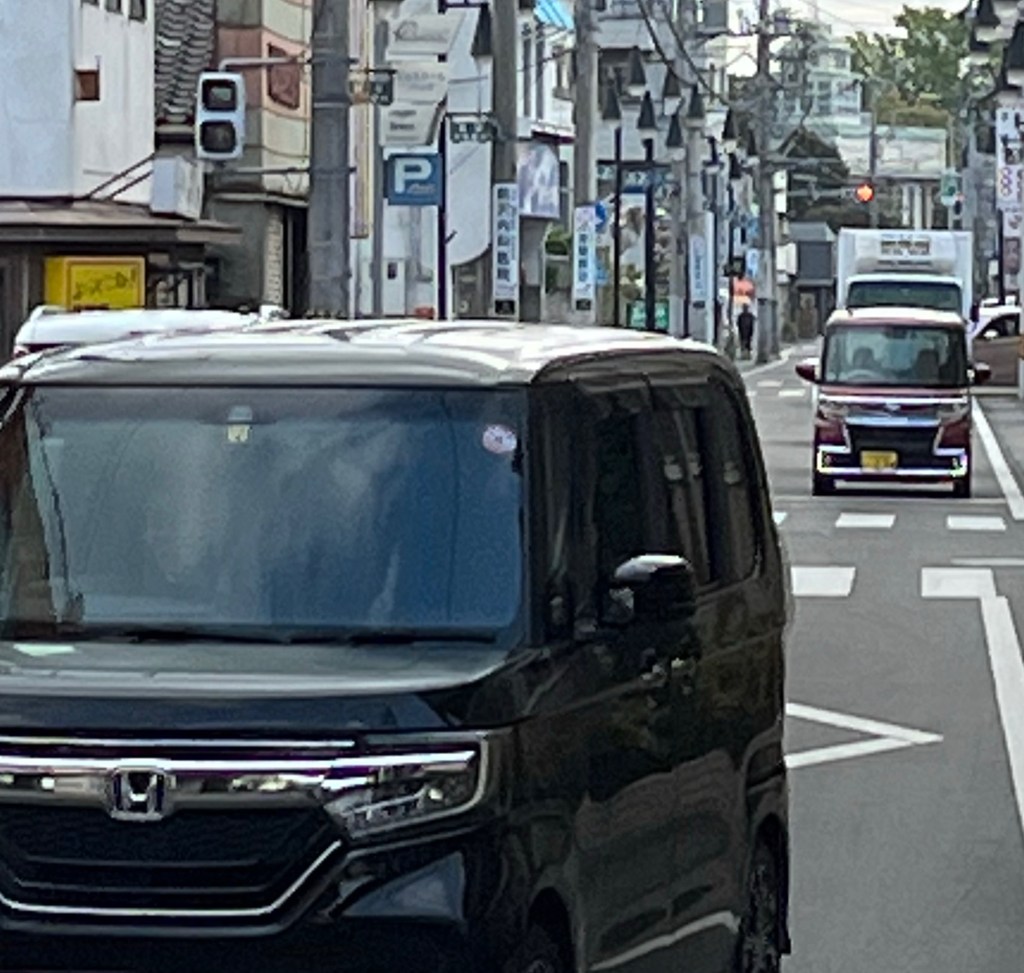
It may be all that more scenic, but once you are on it, you realize that the roundabout route to your destination may not be the best idea.
Usually in Japan, there are two roads to most destinations: the straight one, which uses the expressways, drills through mountains and traverses bridges to give you an almost Shinkansen-like experience of going in a straight line from point A to point B. Although forget driving as fast as the Shinkansen, you will get pulled over and arrested very quickly. The highway police in Japan have very little tolerance for speeding.
On the smaller roads in the mountains, driving fast is not an option (unless you are trying to drive over the edge). No wonder Initial D was set in the mountains of Gunma, where Takumi Fujiwara practiced drifting – where you actually do not drive fast.
So it takes a much longer time to take the roundabout route, unless the weather is bad. In that case it takes a much, much longer time. Typically, the tourist sights have their own parking areas, sometimes even service areas. There is usually an easily accessible route to the sights from the expressways, too. And it will take you a lot less time to use it, even if it may cost a few thousand yen more.
4. Drop Off Your Car In A Location Far From Where You Rented It

In Japan, children learn “seiri seiton” 整理整頓, which translates as “pick up and put in order”. To make sure things are returned to the place you took them is built into the Japanese culture – and applies to rental cars, too.
In Japan, you are expected to return the car to the office where you rented it. Since rental car offices often are quite close, you can usually send the customers to a different office, rather than send the car to the office where they want to pick it up. Transporting cars is expensive and the rental car companies do not want the expense, so they forward it to the customer.
Most rental car companies in Japan will charge you for returning the car in a different location. How much varies by company, and some (like Toyota Rentacar) offer free returns at any office in the same prefecture. Others charge per distance to the return office.
5. Start Late
In Japan, attractions are either open from sunrise (which either means real sunrise, or 0930 -1000) until sunset (which either means real sunset or 1600-1700. When attractions are closed, they are closed, so if you are visiting something that actually has a gate, you will not get in. If the place you are visiting is more like a nature phenomenon, like a volcanic park, crater lake, or mountain it will be open 24 hours, but vositors centers will most likely be open from 10 AM to 5 PM.
So the earlier you start, the more time you will have to see the attraction. In summer, the sun raises around 0430 and sets about 1900; in winter, it raises around 0700-0730, and sets between 1600 and 1700. Even though Japan spans a quite long distance from north to south, Hokkaido is not even close to the same latitude as Scandinavia, but rather the same as Milano or New York, and Okinawa is at the same latitude as Hawaii. Which means there are no white nights in Japan, even in summer.
Since the hours of light do not vary that much over the seasons, attraction and sights will not change their opening times – and in popular seasons, they will be crowded from the moment they open. So if you want to beat the crowds, you have to be early.
Which means that if you start late, you will not only be competing with the crowds for the sights, you will also be competing with them for lunch. So the later you start, the more time you will spend in lines and hustling other people. When you plan a road trip, remember that it pays to be early.
6. Forget The Extras
When you book the rental car, you need to book whatever extra equipment you need as well. And any extra services.
All rental car companies in Japan offer extra services on top of the basic contract. What exactly varies a bit between the rental car agencies. But since all cars in Japan are legally required to have a certain coverage (mainly for the other party in an accident), the insurance they offer is provided on top of that.
Start by figuring out what your travel insurance will cover in terms of damages, especially hospitalization and injury. The basic rental will include basic insurance, but there is almost always additional damages that could occur, and which would be very expensive if you had to pay for them. You can either swallow your pride and buy the extra insurance, or make sure it will be covered by your travel insurance.
There is a third option, and that is to trust your driving skills. After all, accidents are rare. And with a drive recorder in your car (more or less standard in modern Japanese rental cars), it is easy to prove that the accident was not your fault (or conversely, that it was).
Insurance is, however, only one of several extras that the rental car companies can offer. And apart from the insurance, there are two additional extra pieces of equipment that are required in cars – but not always (like the reflector triangle).
The first is snow tires. In winter, in large parts of Japan, snow tires are necessary to drive safely. You have snow from Nagano up to Hokkaido. The winter season starts in November in Hokkaido, and in the mountains bisecting Japan the winter season is usually from the end of December until middle of March. In Hokkaido, it usually ends in the beginning in April.
When there is snow on the roads, or even before that, you need snow tires. Roads can be icy several weeks before the snow falls, which in many ways in more dangerous than driving in snow, ice slicks are not necessarily as visible as snow drifts, and since they do not cover the entire road, they can be far more dangerous than snow conditions.
So from the end of October to the middle of April, you will need snow tires. But you will not get them automatically outside the snow country. You will have to request snow tires separately. And they will come at an extra cost. So if you plan to go to Hakuba or another location in Nagano, you can either rent the car in Tokyo and drive to Nagano, paying extra for the tolls, extra distance and snow tires; or you can take the train to Nagano and rent the car there, which is an altogether more economical option – since the rental will include snow tires, and you will not have to pay for the extra driving distance and the tolls.
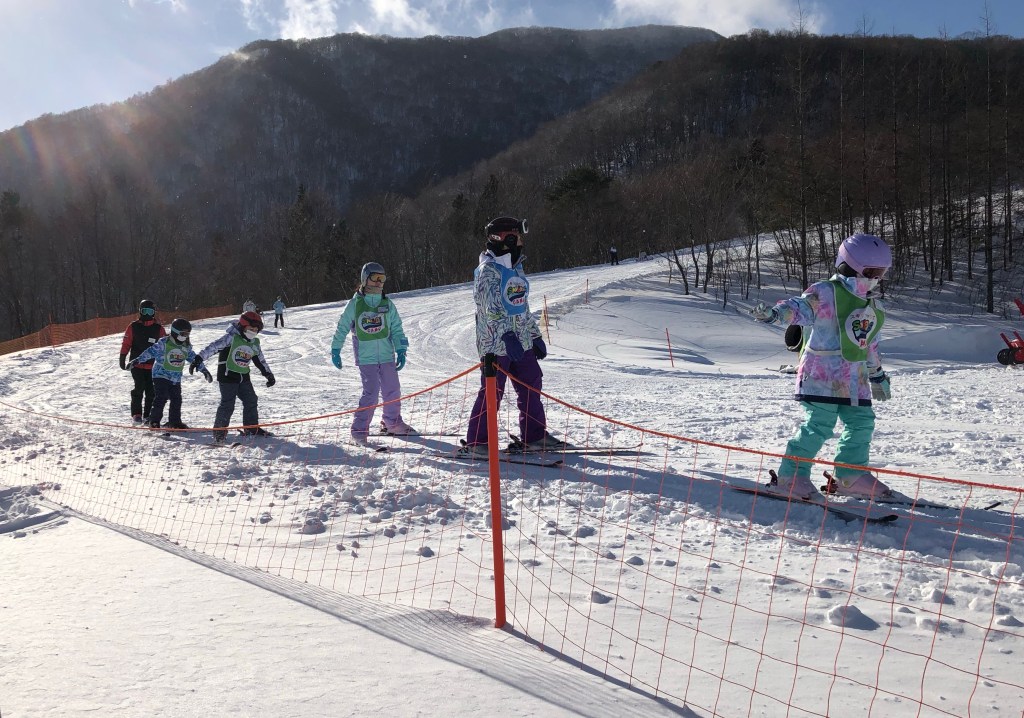
In winter, some car rental companies also offer roof boxes or holders for skis. If you have brought your own skis, or if you have rented skis and are staying in a location with several ski slopes, then a ski box might make sense.
There is one more physical option mandated in cars in Japan, and it has only one legal exception. That is child seats.
In Japan, everyone in the car has to be seated in their own seat, and be strapped in with their seat belt. This means that if you have passengers under the age of six, they have to be in child seats. Children between six and 12 are allowed to use booster cushions until they are physically big enough to use the seat belts without assistance, which usually happens faster in children with European roots than Japanese children.
The only legal exception to children sitting in their own seats is when they are too sick to sit, and you need to take them to hospital. But otherwise, before your kids are six, you need to include child seats in the extra equipment you request from the rental car company. They are typically free of charge.
Another type of extra service that is usually offered free of charge is smoke-free cars. Unless you are an avid smoker, take it. Nothing is so sickening as the smell of stale tobacco smoke, and you will not need that. It takes only one cigarette several drivers before you.
There is one last service that rental car companies often offer, and that is four-wheel drive. The same cars often come in both two-wheel (usually front wheel) and four wheel drive.
The 4WD Japanese rental cars are superior when it comes to driving in snow, but in summer you will hardly need them. They are not intended for driving in terrain, but for roads when the weather and conditions are bad. If you are driving in winter it definitely makes sense to get 4WD, if you are driving in summer on ordinary roads, four-wheel drive makes no sense, an ordinary car is sufficient.
7. Take A Route Without Public Toilets
It is almost impossible to find a route without public toilets in Japan, since convenience stores usually offer toilets to visitors (even if you do not buy anything). But it is possible, especially if you go to places where few people live – such as high up in the mountains, or far out on the coastline. Which also usually happen to be the touristic spots.
If you are driving on the Japanese expressways, finding public toilets are never a problem. There are toilets at all parking and service areas, accessible to people with disabilities (which is not the case with the toilets in convenience stores).
If you have children who are out of their diapers you probably already know the importance of frequent – and sudden – toilet breaks. It is the same when you have elderly passengers, although with them the need tends to be driven by their coffee consumption. Grown-ups who have not passed retirement age may be able to hold it in for longer, but it does not help your passengers.
You need to be aware where to find the public toilets. They are easy to identify in Google Maps. It is an essential, if easily forgotten part of your road trip planning.
8. Drive Long Distances In One Go
A road trip is about more than transporting yourself and your family (or friends, as the case may be) to your destination. A road trip is about seeing things together.
Even if you – or your passengers – do not feel the need for a bathroom break, you will be a dangerous driver if you do not get some rest every now and then. Especially if you are driving when it is dark, which in winter in Japan happens already around 5 PM.
Even if you may be able to drive for six or seven hours straight, that is no fun. Try to plan your breaks to coincide with some attraction or even better a place to stay. A three-day road trip can easily cover lots of ground, and will make it possible to get off the beaten tracks.
Breaking up the trip in two-hour increments is easy to do, and Japan is so full of interesting sights that it is hard to not find any – even if they may mot be the ones that appear on the most common bucket lists.
There is someone else who needs a break every now and then, and that is your car. If you have an electric car you need to charge it, if you have a gasoline or hybrid car (the most common kind in Japan), you need to fill up the tank every now and then. You can drive surprising distances on the gasoline that remains in the car when the empty tank alarm starts beeping, but it is better to avoid that situation altogether.
Especially if your driving takes you to places where there are no gasoline stands. This is unusual in Japan, but if it is likely anywhere, it is in the areas where you would take a road trip to see the sights. So check before you go where the last gasoline stand is located, and keep an eye on the fuel meter. If you have less than one third left, it pays to fill up.
9. Forget That It Is Boring In The Back Of The Car
The driver on a road trip has a much more enjoyable time than the passengers. Anyone who has been on a road trip without driving will recognize this. Especially if you were relegated to the back of the car. There is a limit to how many cows are entertaining to count, especially since the windows are so much higher up when you are backseat age. No wonder modern cars have sophisticated entertainment systems.
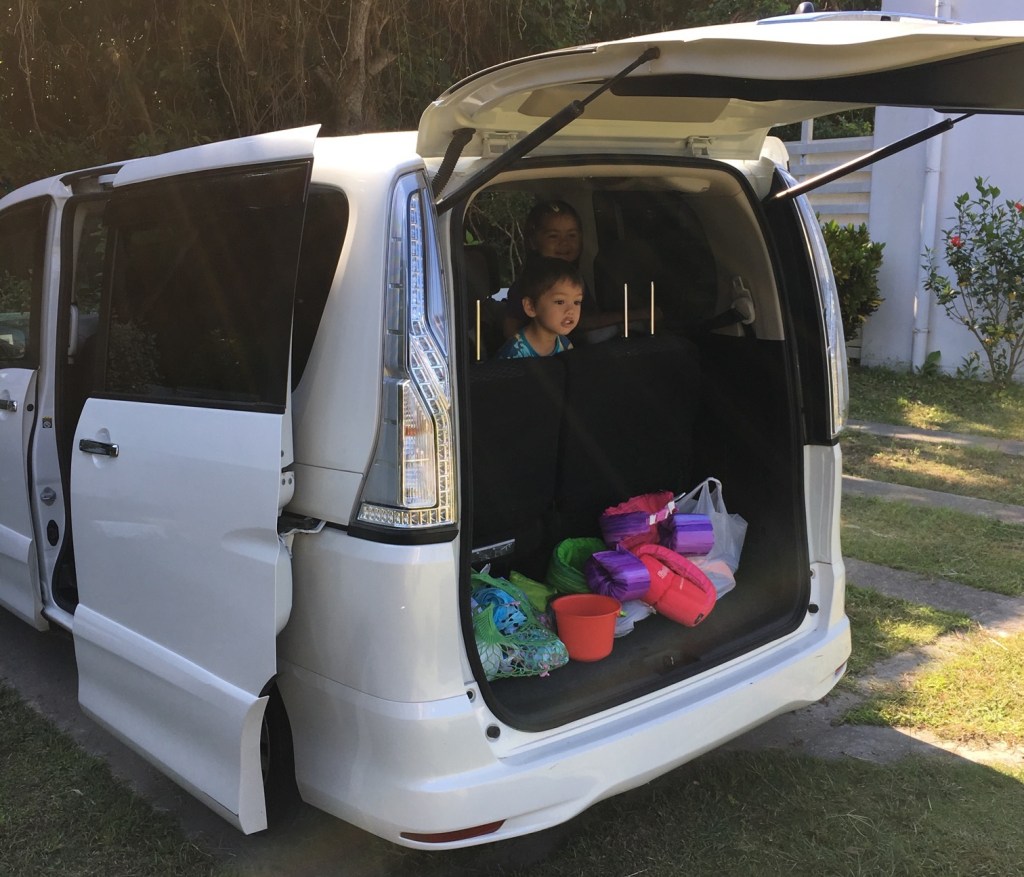
There is a reason passengers keep asking ”are we there yet?”, and that is because they have no control over the drive, and no way to relate where they are to where they have been. Try seeing the navigation system from the back seat in any ordinary car.
This is another reason to schedule frequent breaks, and to start the road trip early – so early that your kids can go back to sleep in the back seat. If you think about it, watching fields and forests whizz by as you hurdle down the highway is even less interesting than trying to count cows (which normally do not go out into the fields anyway).
10. Go Home The Same Day
It is a common mistake to go on a road trip in the morning, look at something, and then head back. Japan may not be so big, but it takes longer than you think to go somewhere – the 150 kilometers from Tokyo to Nikko nominally takes 2.5 hours, which if you use three hours in Nikko (including lunch) means it nominally takes 8 hours for a road trip. But that is under optimal conditions, when there is little or no traffic.
On weekends, and especially long weekends when a holiday follows the weekend, or even worse during Golden Week and the New Years vacations, there can be traffic jams stretching for a hundred kilometers and more. The nominal 2.5 hours turn to five and more. And the hour of day also matters. The early morning is easiest. As the day wears on, traffic thickens, becoming treacle around four – and then gradually clearing up, to become relatively smooth in the evening.
If you are going on a road trip, that means you want to start early and break up your stay by stopping overnight. Perhaps make more than one overnight stop. When you are going to the area north of Tokyo, there are not only plenty of sights, there are also hot spring resorts galore, featuring ryokan with the famous omotenashi hospitality. Staying in a ryokan will be the most rewarding part of your road trip.
Did you find this useful? Then chances are that you will find my book “Driving In Japan” even more useful. You can read the table of contents here, and get the book right away here.
 Japan Top 10